
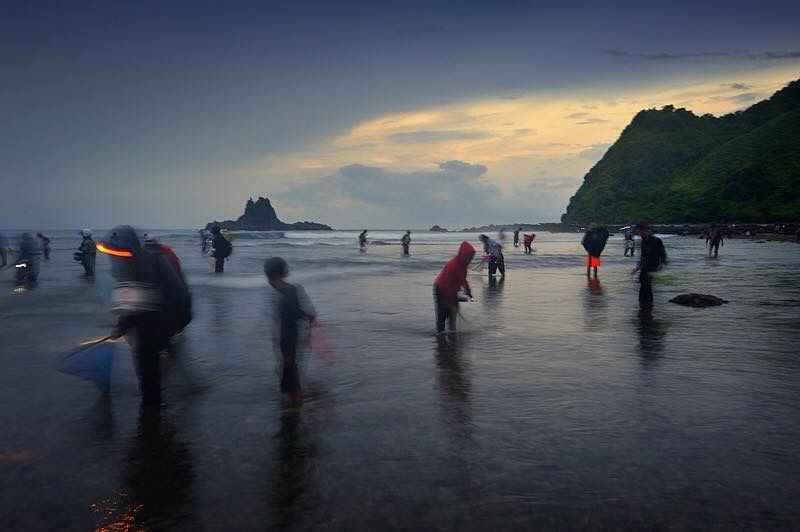
CENTRAL LOMBOK — Indonesia’s tourism strategy in Lombok is often seen through the high-octane lens of the Mandalika International Circuit. Yet, the Festival Bau Nyale 2026, held on February 7th, serves as a poignant reminder that the island’s true gravitational pull remains its mythos. The festival, centered on the ritual capture of sea worms (nyale), celebrates the sacrifice of Princess Mandalika—a narrative that now fuels a significant micro-economic ecosystem.
Governor Lalu Muhamad Iqbal framed the event as more than mere nostalgia, linking the legend’s “spirit of sacrifice” to the province’s modern developmental goals. However, the festival also highlighted the friction between traditional gatherings and modern infrastructure. Visitors had to navigate narrow passages wedged between the circuit’s perimeter fences and local lagoons, highlighting a logistical bottleneck that requires urgent calibration.
Despite weather-induced cancellations of mainstream musical acts, the festival’s soul—the Betandak tradition—remained intact, drawing everyone from local grandmothers like Mak Ace to inquisitive European backpackers. For Central Lombok, the Nyale is not just a biological phenomenon; it is a reliable fiscal anchor in an unpredictable global travel market.
Strategic Audit: Economic Impact & Infrastructure of Bau Nyale 2026
While the 2026 festival demonstrated a successful shift toward community-based management, the local road infrastructure remains a critical bottleneck in accommodating the surge of global and domestic tourists.