
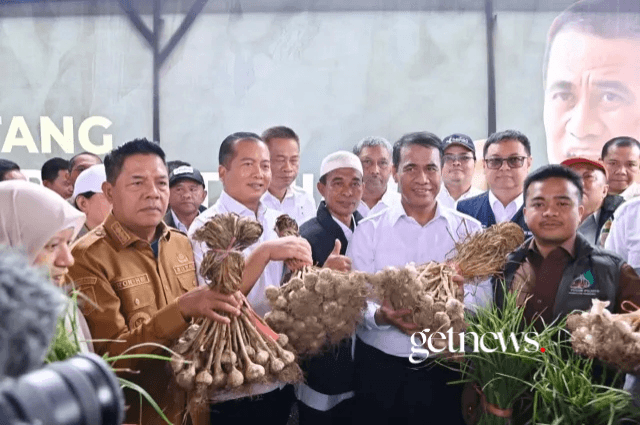
EAST LOMBOK — The Indonesian government has officially designated West Nusa Tenggara (NTB) as the nation’s primary hub for garlic production, a strategic move aimed at slashing reliance on imports. During a high-level field visit to Sembalun on Monday, February 9, 2026, Agriculture Minister Andi Amran Sulaiman confirmed that the region’s geographical advantage makes it the centerpiece of President Prabowo’s accelerated self-sufficiency drive.
Accompanied by NTB Governor Lalu Muhamad Iqbal, the Minister inspected critical post-harvest infrastructure, including seed warehouses and drying facilities. The visit underscores a shift in national policy: moving beyond mere planting to establishing a fully integrated agricultural ecosystem.
”NTB is no longer just a farming location; it is becoming a food ecosystem hub,” Governor Iqbal remarked. The ambition is clear: NTB aims to supply not only the domestic market but eventually the broader regional livestock feed industry with its burgeoning maize production.
Strategic Audit: The Sembalun Agricultural Pivot 2026
The transition from traditional farming to a structured commodity hub requires a synchronization of seed availability, financing, and guaranteed market absorption.
A One-Year Miracle?
Minister Amran noted a “spectacular achievement,” claiming that national food stock targets, originally slated for a four-year realization, were reached in just one year. While the rhetoric remains high, the survival of this ambition depends on the “hilirisasi” (downstreaming) efforts mentioned by Governor Iqbal. By leveraging the Free Nutritious Meal program as a captive market, the government is attempting to immunize farmers against the volatile price swings that often follow a successful harvest.
For NTB, the goal is clear: transforming the fertile soil of Sembalun into a cornerstone of Indonesia’s national economic sovereignty.