
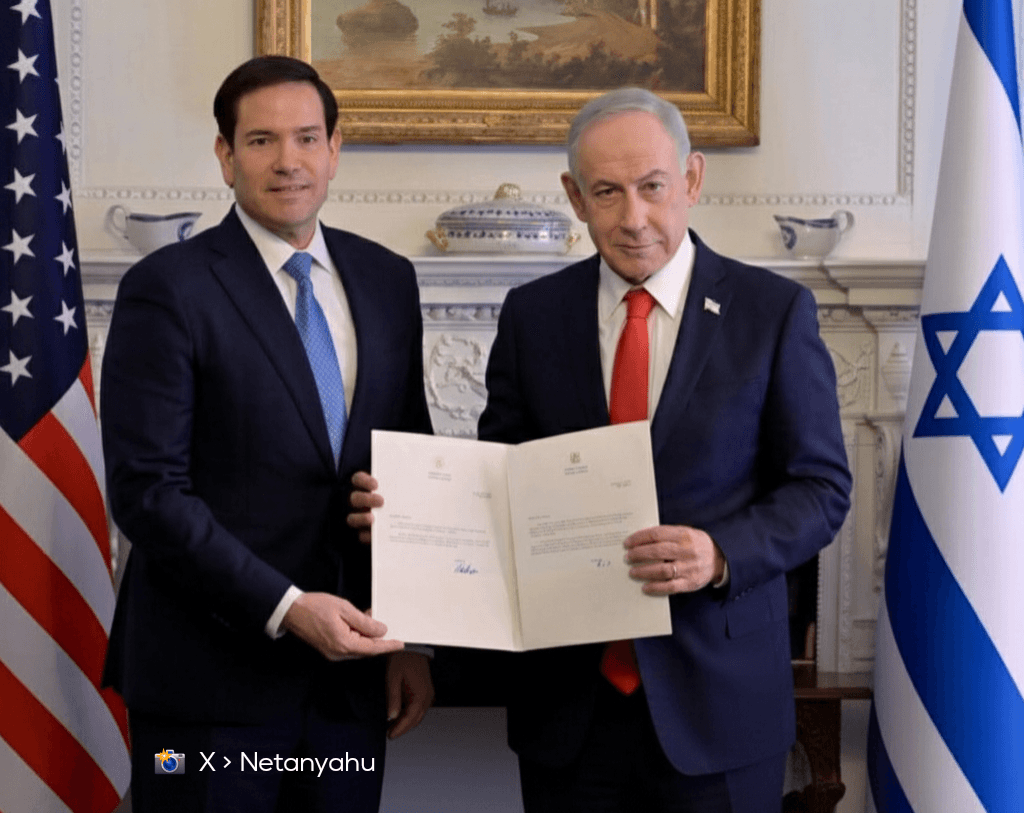
In a move that defies conventional diplomatic logic, Israel has officially signed on as a founding member of the Board of Peace (BoP) for Gaza. The ceremony took place on Wednesday (Feb 11) at Blair House, Washington D.C. Prime Minister Benjamin Netanyahu, flanked by US Secretary of State Marco Rubio, inked a document that effectively turns the chief architect of the recent conflict into its official “peacekeeper.”
To the casual observer, this is a diplomatic breakthrough. To the cynical, it’s akin to inviting a pyromaniac to lead the local fire department’s reconstruction committee. Under the Trump administration’s “New Realism” doctrine, the goal seems clear: peace is no longer about idealistic reconciliation, but about who holds the biggest seat at the reconstruction table.
The irony of the BoP is not lost on the international community. For Netanyahu, this is a masterstroke of political survival. For Trump, it’s a tangible asset to display on his “Deal of the Century” scoreboard. But for those on the ground in Gaza, the term “Peace Board” may feel like a linguistic heist. When peace is managed by the very force that enforced the status quo through munitions, the definition of the word changes from reconciliation to compliance.
As Blair House hosted the signing, the world watched a new era of diplomacy unfold—one where the victor doesn’t just write the history, but also chairs the peace committee. Whether this leads to actual stability or just a more organized form of oversight remains the trillion-dollar question. For now, the “Board of Peace” serves as a stark reminder that in 2026, optics are everything, and irony is dead.