

PENGZHOU, China — For a city like Mataram, the challenge of entering the global marketplace is not simply about finding buyers. It is about building products, standards and business partnerships that can compete beyond Indonesia’s borders.
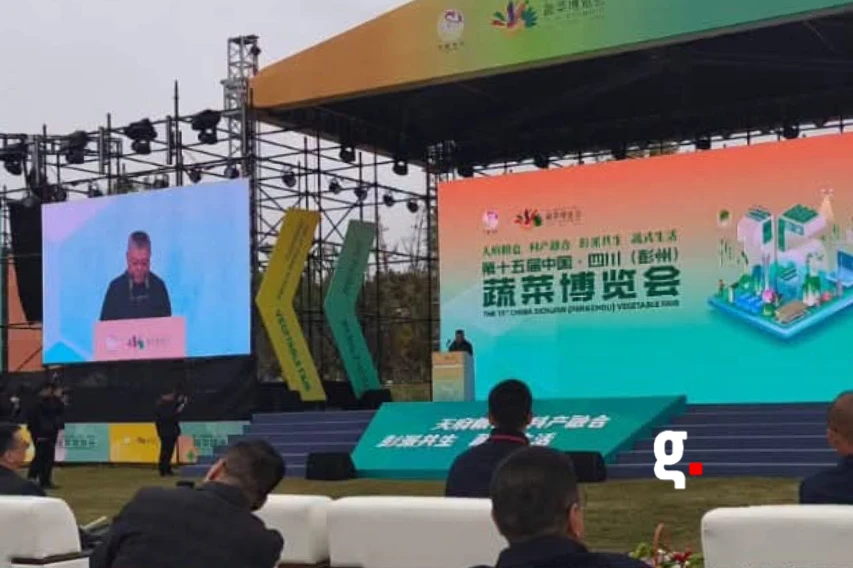
That was the message the city brought to Pengzhou, in China’s Sichuan province, where Mataram Deputy Mayor TGH Mujiburrahman presented the city’s strategy for developing its halal industry before local government officials and dozens of Chinese business representatives.
Speaking as the keynote speaker at the Pengzhou Friendship Forum, held at the city’s Private Economy Development Promotion Centre, Mujiburrahman outlined a vision that places halal production at the intersection of trade, investment and international business cooperation.
His central argument was that halal should be understood as more than a religious designation. It can also serve as a marker of consumer confidence, product integrity and production standards in an increasingly competitive global marketplace.
“Halal is not merely a label. It concerns trust in a product, from its raw materials and processing to packaging and delivery to consumers. In global trade, trust is a very valuable currency,” he said.
The distinction matters. As international supply chains become increasingly interconnected, consumers and business partners are paying closer attention to product origins, ingredient transparency, safety and manufacturing processes.
For Mataram, the opportunity lies in turning those expectations into an economic advantage.
From Local Potential to International Opportunity
The city’s approach reflects an effort to connect Mataram’s halal ecosystem and small businesses with Pengzhou’s industrial capabilities, technology and business networks.
Rather than treating the visit solely as a diplomatic engagement between two cities, the Indonesian delegation sought to frame the relationship around economic opportunities that could benefit businesses on both sides.
Mujiburrahman’s presentation focused on the potential for cooperation in halal industry development, with investment and technology exchange forming part of the broader opportunity.
The proposition is straightforward: Mataram can offer local market potential, halal-oriented businesses and access to Indonesia’s wider consumer base, while Pengzhou brings industrial experience, technological capacity and established commercial networks.
Whether that complementarity can translate into concrete business partnerships, however, will depend on what follows the discussions.
For local businesses, international expansion involves more than identifying potential buyers. They must also meet product standards, establish reliable supply chains, maintain consistent quality and understand the regulatory requirements of their target markets.
Halal certification can be an important part of that process, but it is not, by itself, a guarantee of commercial success.
A Bigger Test for Mataram’s Halal Ambitions
The initiative also raises a broader question about the role of smaller Indonesian cities in the global economy.
Indonesia has a large domestic market and a substantial Muslim consumer base. Yet local businesses seeking to compete internationally still face challenges involving production capacity, technology, financing, certification and market access.
For Mataram, the task is to ensure that international cooperation does not remain confined to official meetings and presentations.
The real test will be whether local enterprises, particularly small and medium-sized businesses, can gain access to technology, improve production standards, establish commercial connections and eventually reach markets beyond Indonesia.
The discussions in Pengzhou have opened a door. They have not yet established where it leads.
For Mataram, the ambition is clear: to be more than a destination for imported products, and to become a city capable of developing and exporting goods that can compete in the international marketplace.
That ambition will ultimately be measured not by the number of international visits or business forums held, but by the partnerships created and the opportunities delivered to local businesses.
Editor: Ofan Ramadhan