
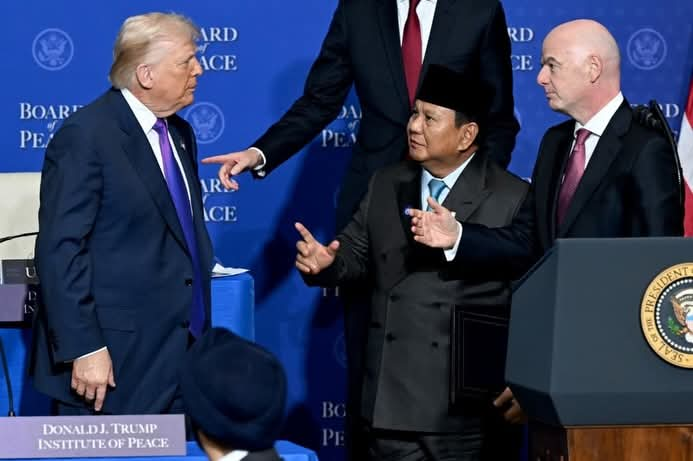
IN AN ERA where global trade winds are increasingly chilled by protectionist blizzards, Indonesia has just secured a fire escape to the world’s largest consumer market. The Agreement on Reciprocal Tariffs (ART), signed in Washington D.C., grants zero-tariff status to 1,819 Indonesian products entering the United States.
This inventory is no mere collection of peripheral commodities. From strategic crude palm oil (CPO) and agricultural staples like coffee and cocoa to future-critical components such as semiconductors, Indonesia’s exports now hold a distinct competitive edge on American soil. Furthermore, the textile and apparel sectors—the backbone of our labor-intensive manufacturing—have secured vital relief through the Tariff-Rate Quota (TRQ) mechanism.
Transactional Logic in the “New World Order”
For those viewing the world through the cold lens of The Economist, this deal is a textbook example of pragmatic transactional diplomacy. In the Trump 2.0 era, market access is no longer a multilateral birthright; it is a reward for those willing to commit to bilateral reciprocity. Jakarta didn’t just ask for an invitation; it offered collateral—ranging from critical minerals to a stabilizing role in the Gaza peace process.
The tariff elimination for Indonesian semiconductors, in particular, signals a tectonic shift in Jakarta’s position within the global tech supply chain. As Washington aggressively seeks “friend-shoring” alternatives to decouple from China, Indonesia has cleverly occupied the vacancy. This is no longer about development aid; it is about mutually assured strategic dependence.
Ambara Verdict: Sante, Lur!
The Washington handshake proves that the 2026 version of “Independent and Active” diplomacy is one that knows exactly when to lean in for a trade-surplus-enhancing hug. With 1,819 products now cleared for entry, the ball is firmly in the court of our domestic industries.
The question is no longer about getting a “ticket” to the show—Prabowo has already bought the front-row seat. The real test is whether our producers can deliver the quality America demands, or if we’ll simply be content holding the ticket while watching the Americans trade with everyone else. In the words of the locals: Sante, lur! (Relax, Brother) Indonesia is officially at the table, now let’s see if we can handle the bill.
Further Reading:
The $38 Billion Handshake: Is This Peace or a Subscription Fee?Verified Source: BPMI SETPRES