
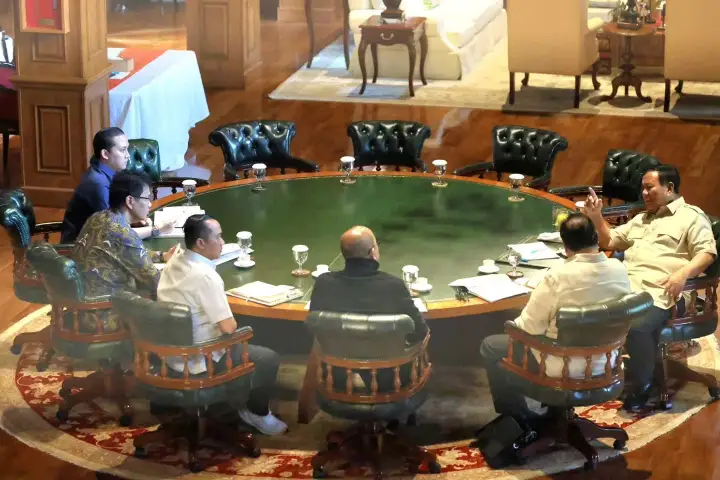
IN THE theatre of economic diplomacy, timing is everything. As President Prabowo Subianto gathered his economic lieutenants at his residence this week, the signal sent to global markets was unmistakable: Jakarta is not merely seeking allies; it is calculating gains. On the precipice of crucial negotiations with a United States led by Donald Trump, Indonesia is weaving a strategy to navigate the labyrinth of “America First” protectionism.
Teddy Indra Wijaya, the Cabinet Secretary, emphasized that Indonesia’s stance in any economic parley—particularly with Washington—must be “the best and most profitable” for the national interest. This is more than domestic rhetoric; it reflects a shift in Indonesia’s economic doctrine towards a more transactional and pragmatic realism. Amidst the perennial threat of global import tariffs, Jakarta is seeking to secure market access without sacrificing the crown jewels of its industrial downstreaming policy.
The stakes are high. The bilateral relationship has long been shadowed by Indonesia’s trade surplus, a frequent target of White House ire. However, with its strategic grip on the global supply chain for critical minerals, particularly nickel, Prabowo holds a trump card that Washington can ill-afford to ignore. The question remains: how far can Jakarta squeeze before the balance tips?
The gathering at Kartanegara is a declaration that Indonesia refuses to be a bystander in the global trade wars. Under Prabowo, foreign policy is an extension of domestic economic calculation. For Jakarta, the best deal is not the most amicable one, but the one that fattens the Republic’s purse.
Verified Source: BPMI SETPRES