

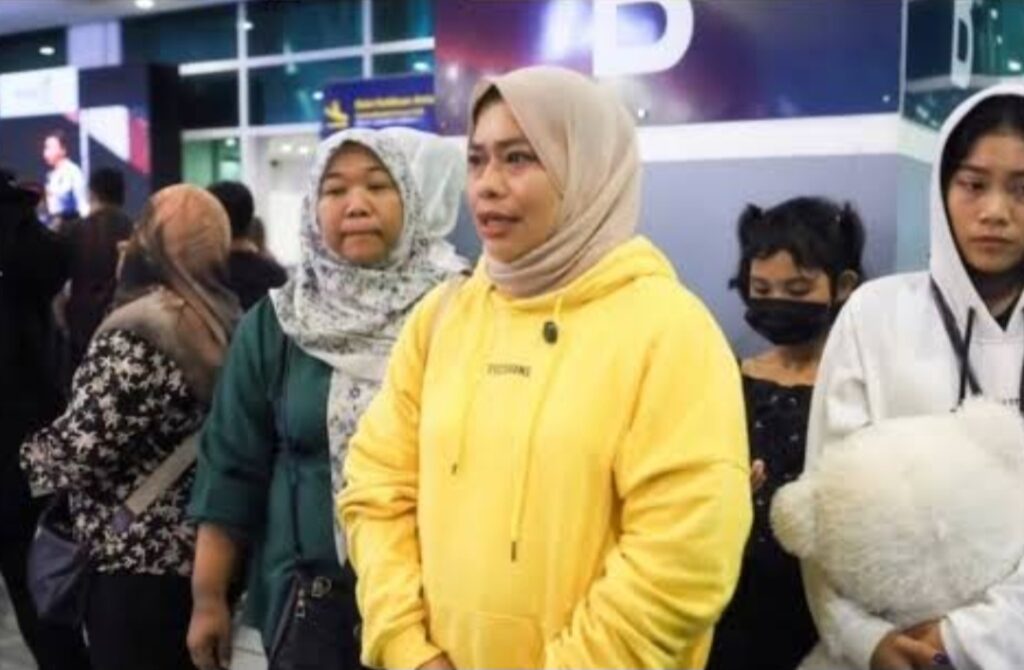
IN THE age of digital outrage, a compelling story of abandonment often travels faster than the mundane truth. The case of Norida Akmal Ayob, a Malaysian national whose alleged 18-year ordeal as a “neglected” sweeper in Lombok went viral across the Malay-speaking world, is a classic study in the divergence between social media sentiment and ground reality. On February 17, the Provincial Government of West Nusa Tenggara (NTB) moved to deflate this narrative with a meticulously documented clarification.
The official rebuttal, presented by provincial spokesperson Ahsanul Khalik, paints a picture not of systemic neglect, but of a transnational life lived within the typical economic ebbs and flows of a migrant family.
The Education and Welfare Litmus Test
The most potent evidence against the “neglect” narrative lies in the administrative paper trail. Far from being denied a future, Norida’s children were fully integrated into the local education system, attending state schools in Central Lombok. Remarkably, the eldest daughter was granted a Bidikmisi scholarship—a state-funded program for high-achieving, underprivileged students—to study Biology at the University of Mataram in 2024.
Furthermore, social welfare records show that Norida herself was a recipient of the BLT Kesra (Social Welfare Direct Cash Transfer) as recently as November 2025. In the cold light of fiscal data, the image of a woman forgotten by the state simply does not hold.
A Private Divorce, Not a Public Failure
The genesis of the viral story appears to be rooted in a messy private divorce finalized in June 2024. While the human element of a marriage dissolving due to infidelity is tragic, the government noted that Norida received a settlement of Rp20 million from her former husband to facilitate her return to Malaysia. Her subsequent employment at a local restaurant (Lesehan) for eight months in 2025 further contradicts the claim that she was forced into menial sweeping for nearly two decades.