
Jakarta Commits to Merit-Based Recruitment and Digital Governance to Align with OECD Standards, Targeting ‘Golden Indonesia 2045’ Vision.
Jakarta – Indonesia has officially entered the technical review phase for its accession to The Organisation for Economic Co-operation and Development (OECD). This step marks a pivotal moment for the government’s ambitious drive to accelerate bureaucratic reform and elevate the quality of public governance to meet global standards.
Membership in the OECD is viewed by the Indonesian government not merely as a diplomatic win, but as a critical economic strategy aimed at achieving the “Golden Indonesia 2045” vision.
Aligning Public Governance with Global Standards
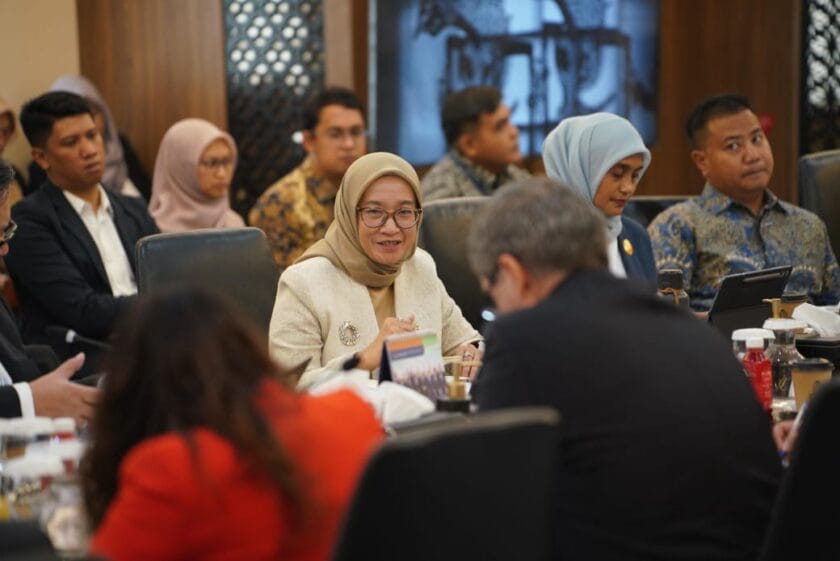
Minister of Administrative and Bureaucratic Reform (PANRB), Rini Widyantini, affirmed that Indonesia’s reform agenda is already highly aligned with OECD principles, specifically concerning leadership and public service capabilities.
- Long-Term Commitment: The transformation of public governance is explicitly integrated into the National Medium-Term Development Plan (RPJMN) 2025–2029. This demonstrates a “firm, long-term commitment… to build more accountable, coherent, and service-oriented public sector institutions”.
- The Core Focus Areas: In a coordination meeting led by Coordinating Minister for Economic Affairs, Airlangga Hartarto, Rini detailed five critical areas of reform:
- Merit-based recruitment.
- Performance management.
- Service innovation.
- A safe working environment.
- Talent development for state apparatus.
Digital Leap: Learning from OECD E-Leaders
Indonesia is also focused on accelerating the implementation of digital and open governance.
- Data and Digital Ecosystem: Recent OECD E-Leaders meetings provided valuable insights for Indonesia on enhancing data governance, developing Public Digital Infrastructure, and accelerating citizen-centric public services. These insights are now foundational to reinforcing the government’s digital ecosystem.
The Road to 2027: Technical Review & Integrity
Entering the technical review phase requires intense preparation by the inter-ministerial team to adhere to a clearly defined accession roadmap.
- Key Milestones: The preparation includes completing technical review questionnaires, following up on recommendations, arranging fact-finding missions, and preparing for the formal review scheduled for 2027.
- The Integrity Pledge: Minister Rini emphasized the importance of guidance from the OECD Secretariat, particularly in strengthening public integrity—a process essential for aligning Indonesia’s bureaucracy with global expectations.
The 2045 Dividend
The government sees OECD membership as a crucial strategy to achieve the ‘Golden Indonesia 2045’ vision.
- Economic Benefit: Experience from current OECD members indicates that accession leads to tangible improvements in public welfare, including higher income growth, better education quality, increased life expectancy, and improved food security.
- Structural Support: The broad policy scope of the OECD, its data-driven approach, and close ties to the global business community provide comprehensive support for Indonesia to refine its structural reforms and enhance economic competitiveness.
By committing to these high global standards, Indonesia is positioning itself to be a competitive and accountable major player in the global economy by 2045.
by. Lilisatya Wati I getnews