
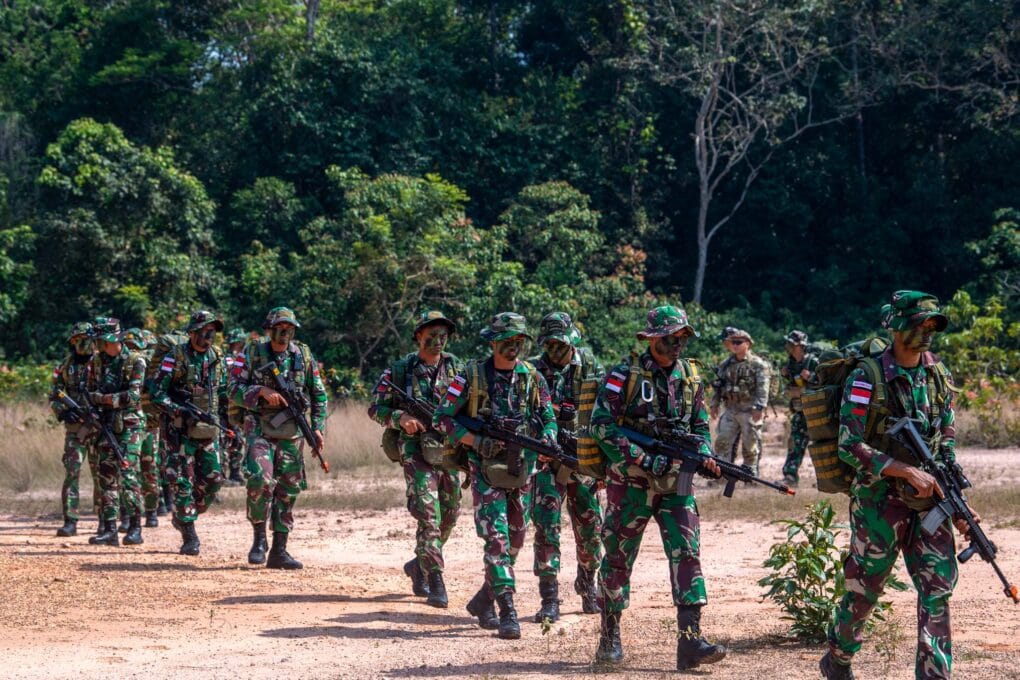
Jakarta’s ambition to deploy troops to Gaza has just met its first major geopolitical reality check. Osama Hamdan, a senior Hamas official, delivered a blunt message to the world—and specifically to the Indonesian government: the Palestinian people do not need external “supervision” or “guardianship.” Hamdan’s rhetoric underscores a deep-seated fear that international forces might inadvertently serve as a “secondary occupation,” replacing Israeli boots with those of an international coalition that manages Gaza on behalf of the status quo.
The message is clear: if Indonesian troops are to arrive, they must not act as a domestic police force to monitor Palestinian life. Instead, Hamas suggests they stand at the borders as a deterrent against Israeli aggression. This “Shield, Not Warden” demand places Indonesia in a precarious diplomatic position. For a nation that prides itself on anti-colonial values, being seen as a force that “replaces the will” of the locals is a reputational risk it cannot afford.
Adding a layer of irony to this dilemma, reports from Israel suggest that the Israeli government has already designated a “strategic location” for the Indonesian barracks between Rafah and Khan Younis. The fact that the deployment site is being mapped by the very power Indonesia traditionally opposes creates a bizarre optic. If Indonesia moves into a “plot of land” pre-assigned by Israel without explicit Palestinian consent, its “Free and Active” foreign policy might be walking straight into a high-stakes offside trap in the heart of the Middle East.