
ON PAPER, President Prabowo Subianto’s aspiration to mediate the volatile triad of the United States, Israel, and Iran is a compelling display of geopolitical bravado. Yet, for Jusuf Kalla, Indonesia’s seasoned former Vice President, diplomatic reality is far less palatable than state rhetoric. The “Merchant of Makassar” recently leveled a piercing critique at the heart of the administration’s political economy, arguing that Indonesia has effectively surrendered its leverage.
Reciprocal Handcuffs and National Dignity
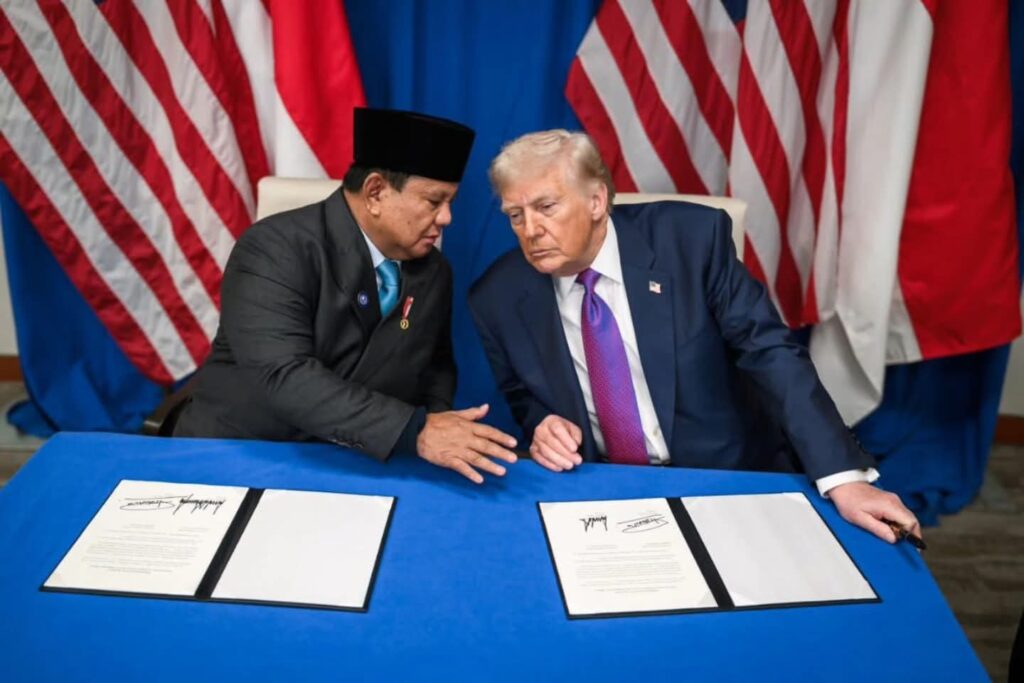
The crux of Kalla’s argument lies in the fundamental asymmetry of power. A recently inked reciprocal trade agreement between Jakarta and Washington—hailed by the palace as an economic victory—is viewed by Kalla as a “lopsided deal” that disadvantages the archipelago.
The logic is simple but devastating: How can Indonesia mediate between clashing titans when it remains “steered” by American interests in its own trade affairs? Effective mediation requires moral capital and strategic autonomy. If Jakarta’s movements are constrained by one-sided economic commitments, its claim to “neutrality” becomes a statistical impossibility.
Gaza, Iran, and the Washington Veto
Kalla pointedly reminded observers that the Middle Eastern conflict map is rarely drawn without the White House’s imprimatur. The global failure to broker peace between Israel and Palestine serves as a grim testament to the fact that American stance remains the ultimate determinant. With an economy increasingly tethered to the U.S. through this reciprocal pact, Prabowo may find it impossible to exert the objective pressure necessary to move the needle in Tel Aviv or Tehran.
INTELLECTUAL VERDICT
Kalla’s analysis is not mere elder-statesman cynicism; it is a stark warning regarding the geography of power. By pursuing investment figures through “imbalanced” reciprocal agreements, Indonesia has voluntarily surrendered its moral scepter. Without robust economic sovereignty, Prabowo’s intentions for Middle Eastern peace risk being relegated to hollow rhetoric—ignored by Washington and Teheran alike.
FURTHER READING:
The $38 Billion Handshake: Is This Peace or a Subscription Fee?