
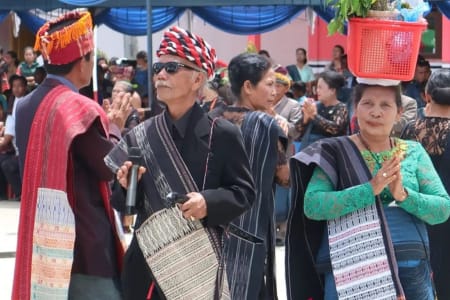
In mandok hata, everyone can share their thoughts with extended family on New Year’s Eve.
New Year is not just a change on the calendar; it is a golden opportunity to come together, share stories, and express hopes. In Indonesia, a country rich in culture, New Year is celebrated with various unique and charming traditions.
One of the notable traditions is the mandok hata from the Batak tribe in North Sumatra. Mandok means ‘to utter’ and hata means ‘word.’
This tradition represents a sacred moment where people can share their thoughts with the extended family on New Year’s Eve. Their speeches include gratitude, apologies, personal introspection, and aspirations for the upcoming year.
The mandok hata tradition follows a joyful New Year’s Eve event series. On Dec. 31, Batak Christian families come together for a heartfelt church service. They gather at home upon their return, eagerly awaiting the new year.
Together, they had dinner before the evening entertainment started, with singing and laughter. As the clock strikes midnight, the New Year celebrations will begin, marked by a spectacular fireworks show.
Now, the joy is just about to begin! After the fireworks show, all family members will gather for a unique New Year’s Eve service, which is followed by the mandok hata procession.
Mandok Hata Process
The beautiful tradition begins with the youngest family member and concludes with the head of the family. Everyone can share their thoughts, express gratitude for the blessings received, offer apologies for mistakes made in the past year, and share hopes and resolutions for the year ahead. Parents often provide guidance and advice, which makes this moment even more special.
This gathering creates a genuinely touching atmosphere, occasionally leading to tears when someone bravely shares feelings that were hard to express.
Participating in mandok hata can be daunting for young family members, as they must find the right words and face evaluations from their parents. However, this cherished tradition allows them to voice feelings kept inside for far too long.
One of the things that makes mandok hata so unique is the deep-rooted migration tradition within the Batak people. Many people seize New Year’s Eve to return to their hometowns and reconnect with maternal and paternal extended family.
This custom includes not only immediate family but also distant relatives. As soon as the ceremony wraps up, the atmosphere shifts positively as everyone gathers to enjoy delightful snacks. Family members greet each other with handshakes, exchanging heartfelt New Year’s wishes before diving back into the festivities or pausing to reflect.
Greater Significance
In addition to being a tradition, mandok hata represents warmth, reflection, and adherence to family values. Amid everyday chaos, this tradition allows each family member to reflect on their life’s journey, bring people together, and deepen their bond and connections.
In this fast-paced modern era, practices like mandok hata are a beautiful reminder of the importance of spending quality time with our loved ones. They also highlight the richness of Indonesia’s cultural diversity, showcasing how each ethnic group has its unique way of celebrating the new year.
The uniqueness of mandok hata has contributed to its preservation to this day. Despite the increasing challenges faced by modernization and changing lifestyles, this tradition is a cherished event for Batak People, especially when they get the chance to return to their hometowns.
The mandok hata tradition embodies universal values like gratitude, self-reflection, and hope. It is more than just a celebration; it is a heartfelt occasion for reflection and a wonderful reminder of the richness and vibrancy of Indonesian culture.
Wishing you a joyful New Year 2025! May traditions like mandok hata continue to inspire and serve as a legacy that strengthens our bonds in this beautiful country.
indonesia.go.id