
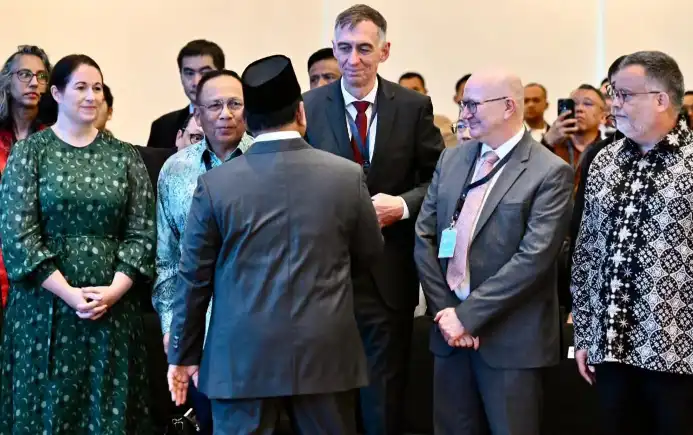
At the Indonesia Economic Outlook 2026, held at Wisma Danantara, President Prabowo Subianto unveiled a staggering fiscal achievement: a savings of over Rp300 trillion (approx. $18.8 billion) within the first year of his administration. The narrative is clear—this is not “new” money, but capital rescued from what the President describes as the “jaws of corruption” and bureaucratic inefficiency. This rescued treasury is now being channeled into a massive experiment in rural self-sufficiency.
The cornerstone of this shift is the Koperasi Merah Putih (Red and White Cooperatives) and a radical revitalization of the maritime sector. For decades, Indonesian fishermen have operated on the fringes of the economy, hampered by a lack of basic infrastructure like cold storage and reliable fuel access. Prabowo’s goal is to integrate these communities into the formal economy by building 1,000 integrated fishing villages in 2026 alone, with a target of 5,000 by 2029.
However, the real “engine” of this transformation is the cooperative network. With a target of nearly 30,000 units, these cooperatives are designed to act as rural micro-hubs—providing cold storage, affordable pharmacy services, and low-interest financing. It is an aggressive attempt to eliminate the “rentenir” (predatory lenders) and build a domestic supply chain that can withstand global shocks. For international observers, the message is unmistakable: Indonesia is turning inward to find its next growth engine.