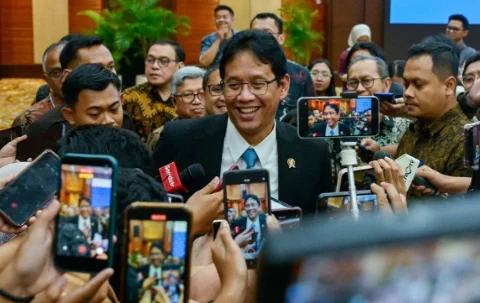


EDITORIAL NOTE: This Special Report is based on cross-referenced primary documents from the UK Department for Business and Trade, the Ministry of Foreign Affairs of the People’s Republic of China, and real-time market data from the NYSE. INDONESIA INSIGHTS remains committed to a policy-neutral, audit-based journalistic approach.
DAVOS, Switzerland — Beneath the veneer of “Coffee Diplomacy” at the Indonesia Pavilion, a tectonic shift is rattling Jakarta’s foreign policy. President Prabowo Subianto’s decision to sign the Board of Peace (BoP) charter—a brainchild of the Trump administration—has ignited an overt rift with the BRICS axis. Indonesia is no longer merely “Independent and Active”; it is now unequivocally deploying a doctrine of Transactional Pragmatism.
The Hidden Gap: What China Failed to Deliver
An economic intelligence audit by INDONESIA INSIGHTS reveals a “strategic ceiling” in Prabowo’s overtures toward the BRICS bloc. There are three pivotal reasons why Beijing and Moscow failed to meet Jakarta’s strategic expectations, ultimately forcing Prabowo into the orbit of Trump’s transactionalism:
- Dollar Liquidity & Western Market Access: While China excels in infrastructure financing, Indonesia requires massive Dollar liquidity to stabilize the Rupiah amidst an ambitious 8% growth target. The recently signed £4.5 billion (IDR 90 Trillion) UK-Indonesia Growth Partnership is a testament to “cash on hand” that is far more liquid than Beijing’s asset-backed lending models.
- Core Military Technology Transfer: Despite Russia’s defense offers, the looming shadow of CAATSA sanctions makes reliance on Moscow a security liability. Prabowo requires Washington’s “seal of approval” to ensure a steady flow of high-end Western hardware and NATO-grade licenses for the Indonesian Armed Forces (TNI).
- The “Regional Overseer” Mandate: Unlike Beijing, which tends to view Indonesia as a mere provider of raw materials through primary-stage downstreaming, Trump’s BoP offers Indonesia a prestigious role as a “Regional Overseer”—a strategic leadership position to safeguard stability in the Middle East. This is not subordination; it is a high-stakes recognition of Indonesia’s diplomatic and military leverage within the Islamic world—a recognition Xi Jinping has notably withheld in favor of extractives-led industrialization.
Strategic Audit: The 2026 Transactional Calculus
Editorial Verdict: Realism Over Loyalty
This special report concludes that Prabowo Subianto is not betraying China or Russia; he is remaining faithful to the requirements of Indonesia’s national exchequer. However, this victory of “certainty” in London and New York comes with inherent risks. Jakarta must brace for potential political blowback from Beijing in the form of non-tariff trade barriers that could disrupt the flow of downstream exports to the Chinese mainland.
The pivot to the BoP is a somber admission that the economic independence envisioned in “Prabowonomics” requires the fuel of Western capitalism. For Prabowo, in an era of global volatility, standing on the right side of history is only useful if it feeds his people and builds his industry.
INDONESIA INSIGHTS | STRATEGIC INTELLIGENCE UNIT
Specializing in transactional diplomacy and economic audits. Providing a high-stakes perspective on Indonesia’s global positioning in the 2026 Davos summit.
Primary Sources & Data Verification: