
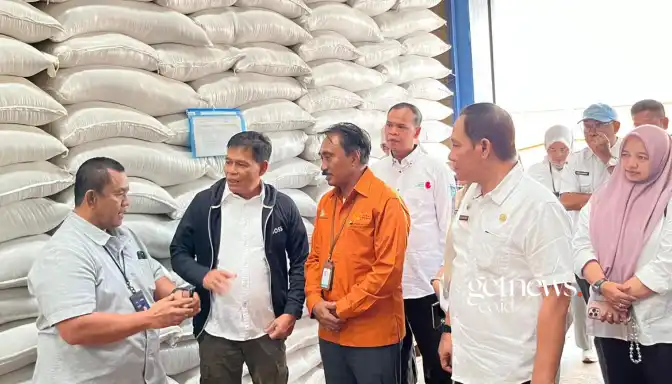
MATARAM — In the dry, heat-shimmering plains of West Nusa Tenggara (NTB), the silos are groaning. While much of the archipelago frets over food security amid Middle Eastern geopolitical tremors, Perum Bulog’s regional chief, Mara Kamin Siregar, faces a high-class problem: an embarrassment of riches. As of March 3, 2026, NTB’s warehouses are so well-stocked with rice and corn that the provincial surplus has moved from a safety net to a logistical headache.
The solution is a maneuver known in the bureaucratic lexicon as mobilisasi nasional (movenas). It is, in essence, a tactical evacuation of grain to stabilize the neighboring markets of Bali and East Nusa Tenggara (NTT).
The Logistics of Abundance
Bulog’s strategy is not merely an act of regional charity; it is a calculated clearing of the decks. By the first week of March 2026, NTB had already shunted 6,073 tonnes of rice across the Lombok Strait. This follows a massive 2025 campaign that saw over 30,000 tonnes of rice and 23,000 tonnes of corn moved outbound.
For Bali and NTT, this supply chain is a lifeline. Neither island possesses the volcanic fertility or the extensive irrigation systems of Lombok and Sumbawa, making them perennially dependent on NTB’s “breadbasket” status. By pumping surplus into these markets, Bulog prevents price spikes in Denpasar and Kupang while simultaneously preventing a localized price collapse for farmers in Mataram.
Clearing the Silos for the Harvest
The urgency behind these shipments is driven by the calendar. The Great Harvest (Panen Raya) is looming. If Bulog does not empty its current inventory, it will lack the physical “venting” capacity to absorb the incoming wave of new paddy and corn.
In the world of agricultural economics, an overstuffed warehouse is a liability. It leads to storage rot and, more dangerously, signals to the market that Bulog cannot buy more, which would allow private middlemen to drive down the prices paid to farmers. Mr. Siregar’s “Grain Exodus” is thus a preemptive strike to maintain Bulog’s role as the “buyer of last resort.”
Final Note: The Silent Guardian of the East
Bulog NTB’s optimism is well-founded, but the broader risk remains. As transportation costs fluctuate with the volatile global oil market—impacted by the Iran-Israel tension—the cost of “moving the grain” will inevitably rise. For now, NTB remains the silent guardian of the eastern archipelago’s dinner plates. If Mataram can continue to manage its surplus with this level of surgical precision, Bali’s tourists and NTT’s households can rest easy. The silos are open, and the grain is moving.