
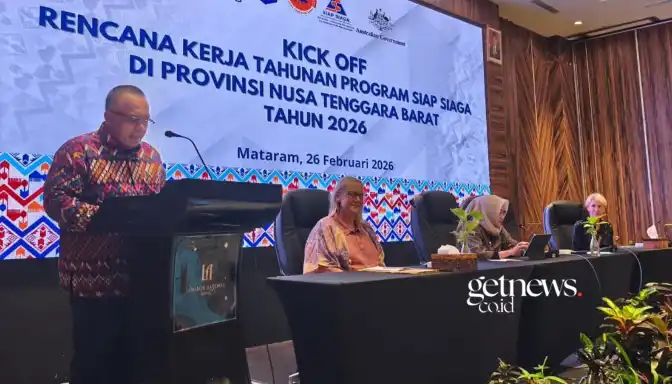
MATARAM — In the sophisticated architecture of global finance, institutional investors have moved beyond the traditional metrics of GDP growth and political stability. In the era of climate volatility, the variable ascending to the top of their due diligence checklists is the Disaster Resilience Score. For West Nusa Tenggara (NTB), an archipelagic province sitting precariously on the “Ring of Fire,” disaster resilience is no longer a humanitarian niche—it is a matter of sovereign solvency.
Macroeconomic research increasingly confirms a stark correlation: regions with substandard mitigation systems pay a significantly higher “risk premium” on their cost of capital. Investors view unmitigated natural hazards as systemic supply chain disruptions and potential default triggers. Conversely, the integration of the SIAP SIAGA Program into NTB’s 2026 Annual Working Plan represents a calculated strategic move to de-risk the province’s balance sheet.
STRATEGIC AUDIT: RESILIENCE-DRIVEN INVESTMENT GRADE
Investigative Analysis: The Price of Uncertainty
Without quantifiable mitigation—such as the framework currently being spearheaded by Bappeda NTB—every dollar invested in the Mandalika tourism circuit or Sumbawa’s renewable energy sector carries an invisible “geological surcharge.” However, by positioning itself as a “Policy Laboratory for Island Adaptation,” the provincial government is effectively engaging in a massive De-risking exercise.
Furthermore, the integration of GEDSI (Gender Equality, Disability, and Social Inclusion) principles within the SIAP SIAGA partnership significantly bolsters the region’s ESG (Environmental, Social, and Governance) credentials. In today’s global capital markets, ESG compliance is the golden ticket for attracting “green” investment funds from Europe and North America, which are increasingly seeking safe havens for sustainable growth.
GetNews Verdict
The West Nusa Tenggara provincial government must consistently market its mitigation success as an economic tool. Managing disasters to international standards (Australia-Indonesia) is more than just saving lives; it is about shielding the regional treasury from fiscal bankruptcy caused by unpredictable shocks.
FURTHER READING:
The $38 Billion Handshake: Is This Peace or a Subscription Fee?