
Why the MK challenge to the MBG program is a crucial defense against “Executive Budgeting” without borders.
The legal battle over the 2026 Budget Law (UU APBN) is more than just a dispute over school lunches; it is a fundamental clash over the “Power of the Purse.” By granting itself the discretion to shift massive tranches of capital via Presidential Decree (Perpres) for the Makan Bergizi Gratis (MBG) program, the administration is effectively testing the limits of fiscal elasticity. The “MBG Watch” coalition’s claim of budgetary abuse of power strikes at the heart of a growing trend: the use of the annual budget law as a bypass for permanent legislative debate.
The “Vantage” here is the risk of “cannibalizing” the state’s fiscal health. When a strategic national policy is built on the shifting sands of an annual budget rather than a dedicated organic law, it bypasses the rigorous public and parliamentary scrutiny required for long-term commitments. This “Executive-heavy” budgeting model creates a structural imbalance where critical sectors—education, health, and infrastructure—could see their funds reallocated to a “political centerpiece” at the stroke of a pen.
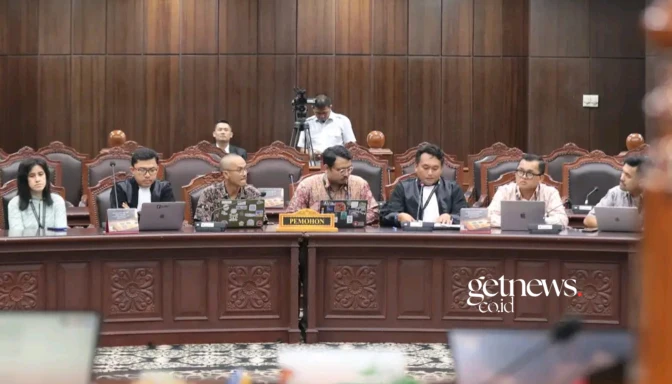
For the global analyst, this case is a litmus test for Indonesia’s democratic institutions. Can the Constitutional Court (MK) restrain the executive’s appetite for fiscal shortcuts? If the court allows the current design to stand, it signals a shift toward a more centralized, decree-driven economic management style. However, if the court sides with the petitioners, it will reaffirm that in a constitutional democracy, the budget is a contract with the people, not a flexible vehicle for unilateral strategic ambitions.