

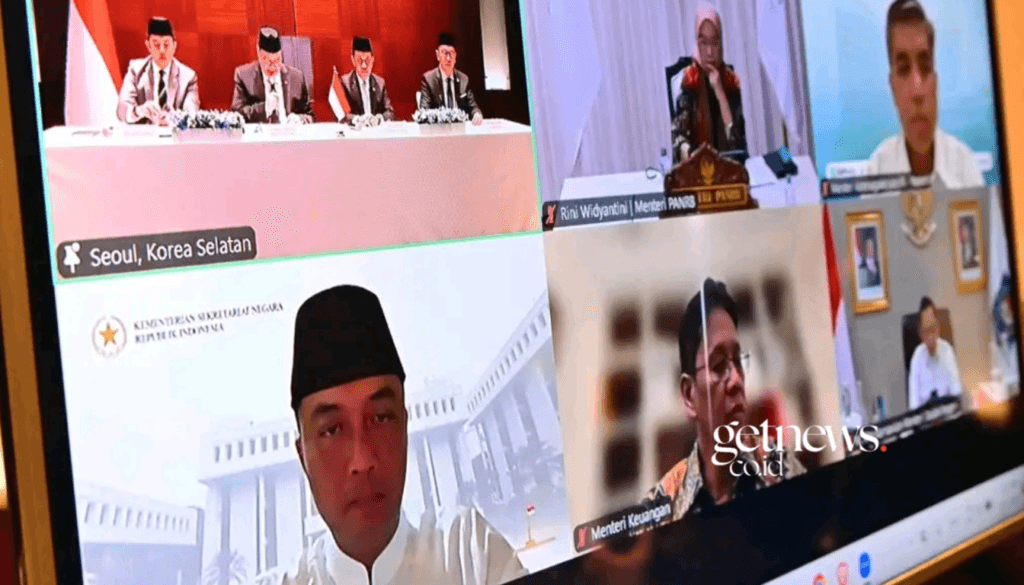
Why Indonesia’s mandatory WFH for civil servants is a desperate tactical retreat masked as digital progress.
In the lexicon of modern governance, “digital transformation” is often the preferred shroud for fiscal necessity. The Indonesian government’s latest decree—mandating a Work-From-Home (WFH) Friday for the nation’s vast army of civil servants (ASN)—is a quintessential example. Officially framed by Coordinating Minister for Economic Affairs Airlangga Hartarto as a leap toward “digital-based service governance,” the policy’s true catalyst lies thousands of miles away in the volatile oil fields of the Middle East.
The timing of the announcement, delivered from Seoul on March 31, 2026, is telling. As geopolitical tensions in the Middle East send shockwaves through global energy markets, Jakarta is feeling the heat. This is not a voluntary shift toward a progressive work-life balance; it is a calculated “tactical retreat” to curb fuel consumption and protect a fragile national budget from surging subsidy costs. By grounding its bureaucracy for 20% of the workweek, the state is attempting a massive, synchronized reduction in the national carbon—and fiscal—footprint.
Critics will rightly question the “Digital Governance” narrative. Transitioning a sprawling, often analog-heavy bureaucracy to a remote model overnight risks more than just “zoom fatigue”; it risks a service vacuum. However, the government is betting that the necessity of crisis will force an efficiency that years of quiet reform could not. The logic is simple: if the state cannot afford the fuel to move its people, it must finally master the bits and bytes to move its data.
Yet, the “Friday Pivot” carries a deeper symbolic weight. It reflects a government that is increasingly “adaptive”—a polite word for reactive. While the move strengthens national energy resilience in the short term, it also highlights the vulnerability of Indonesia’s economic stability to external shocks. As the circular letters from the Ministry of PAN-RB and Home Affairs hit desks across the archipelago, the message is clear: the era of the daily commute is a luxury the state can no longer subsidize. In the new world order, digital sovereignty is the only hedge against energy dependency.