
Why NTB’s resilient non-mining growth masks a structural headache for the new administration.
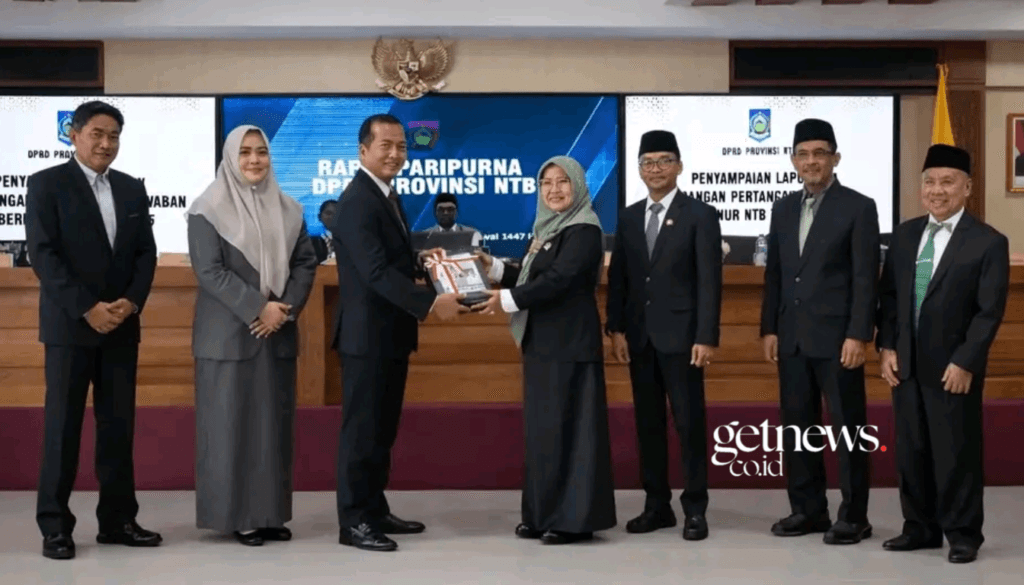
In the world of regional macroeconomics, “ceteris paribus”—the assumption that all other things remain constant—is a luxury that policymakers in West Nusa Tenggara (NTB) can no longer afford. As the provincial government presented its 2025 Accountability Report (LKPJ) this week, the numbers told two very different stories. On one hand, a vibrant non-mining sector surging at 8,33%; on the other, a total growth figure of 3,22%, anchored down by a volatile mining industry.
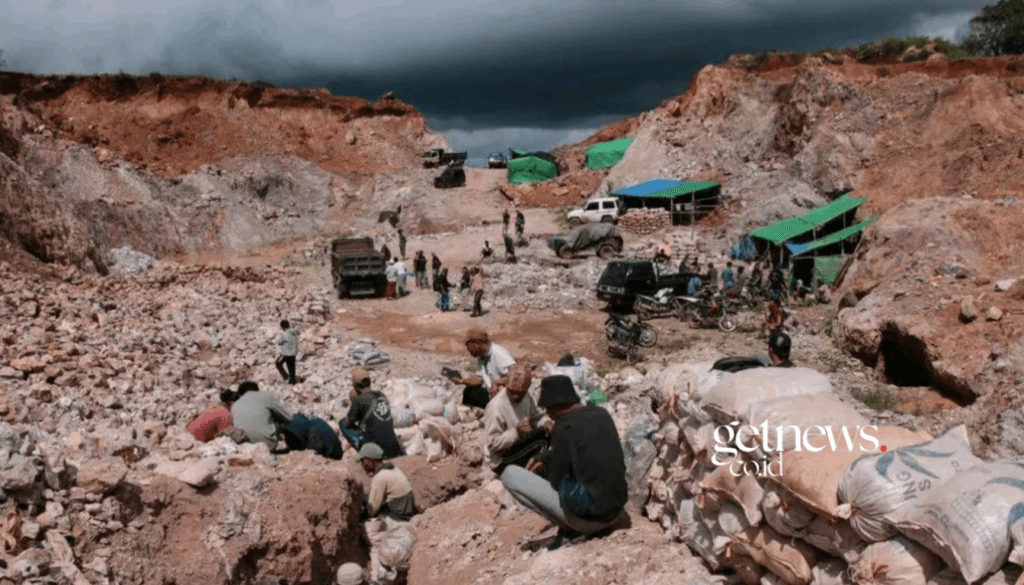
The 2025 fiscal year was supposed to be the springboard for the “Prosperous and Global NTB” vision. The original blueprint anticipated a steady climb to 6% growth. Instead, the administration was forced to start from a defensive crouch. Thanks to a sharp contraction in mining exports, the real starting line wasn’t the projected 5.3% growth, but a chilling minus 1.47%.
This is the “Statistical Mirage.” To the casual observer, 3.22% looks like a slowdown. To the strategist, it represents a remarkable feat of structural resilience. The fact that the economy remained in positive territory is a testament to the “real” economy—processing industries, tourism, and agriculture—which acted as a domestic shock absorber against the turbulence of the global mineral market.
[Image showing a split-screen chart: one side vibrant tourism/agriculture, the other a dormant mining site]
However, resilience is not the same as transformation. While the non-mining engine is revving high, the overall fiscal health remains hostage to a sector it cannot control. For NTB to truly go “Global,” Mataram must move beyond managing contractions and start decoupling its regional fate from the erratic pulse of the pits. The 2025 LKPJ is a reminder: in the hunt for prosperity, it is the stability of the village, not the volatility of the mine, that will ultimately define the province’s wealth.
FURTHER READING:
A Poultry Pivot: Lombok’s $75m Bet on Protein Autonomy