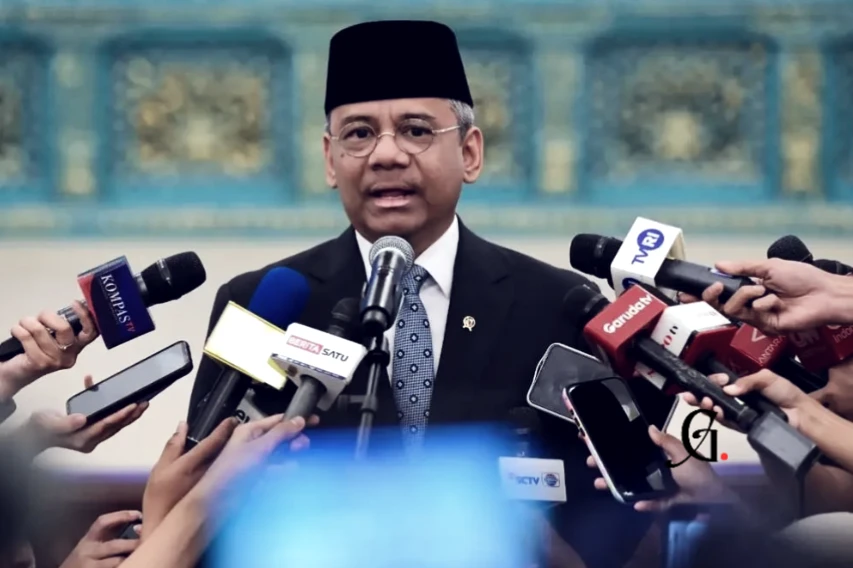


JAKARTA — Amidst global market turbulence and the tightening chokehold on the Strait of Hormuz, Indonesia’s first-quarter budget realization report for 2026 revealed a figure that might make some analysts flinch: a deficit of IDR 240.1 trillion. However, at the Ministry of Finance, Minister Purbaya Yudhi Sadewa remains unfazed. According to him, this widening gap in the early months of the year is a product of a deliberate “front-loading” expenditure design, ensuring the economic engine does not stall during the initial phase of the year. This strategy is a pragmatic response to external challenges that require the government to flex its fiscal muscles as early as January.
Purbaya explicitly urged the public not to be alarmed. The stark difference from last year’s first quarter lies in the shift of spending rhythm. The government is no longer waiting until the end of the year to execute strategic programs, including energy subsidies that have ballooned due to the Iran-Israel crisis and grassroots economic empowerment initiatives like the Desa Berdaya (Empowered Village) program. This deficit is the price of a choice: maintaining domestic consumption stability amidst a global energy inflation storm.
Navigation Amidst Uncertainty
This widening deficit also aligns with what Deputy Finance Minister Juda Agung describes as “decision making under uncertainty.” By holding fuel prices steady at the pump to prevent a domestic price explosion, the government has consciously accepted the consequences on the financing post. First-quarter state spending has been directed to serve as a social buffer, ensuring that the people’s purchasing power remains intact as the nation enters the critical Ramadan and Eid al-Fitr periods.
Macroeconomically, Indonesia’s fiscal credibility is being tested. While the deficit appears large in nominal terms at the start of the year, Purbaya assured that the annual target remains within the safe limit of under 3% of GDP. The real challenge for the Ministry of Finance lies in ensuring that this massive first-quarter spending is truly productive and well-targeted—including through inclusive data audits to ensure no budget leaks into non-priority sectors amidst increasingly tight fiscal space.
GetNews Strategic Audit: APBN Deficit March 2026
Analysis of the budget deficit posture and design:
Editorial Verdict: Honesty Behind the Numbers
The IDR 240 trillion deficit is proof that Purbaya is not playing it safe. GetNews views this strategy as a double-edged sword: it provides short-term domestic stability but demands extraordinary discipline in state revenue in the following quarters. Amidst the Constitutional Court (MK) challenge to the Budget Law regarding the Free Nutritious Meal (MBG) program, transparency regarding this deficit design is key to dampening market speculation and maintaining investor confidence in Indonesia’s economic resilience throughout 2026.