
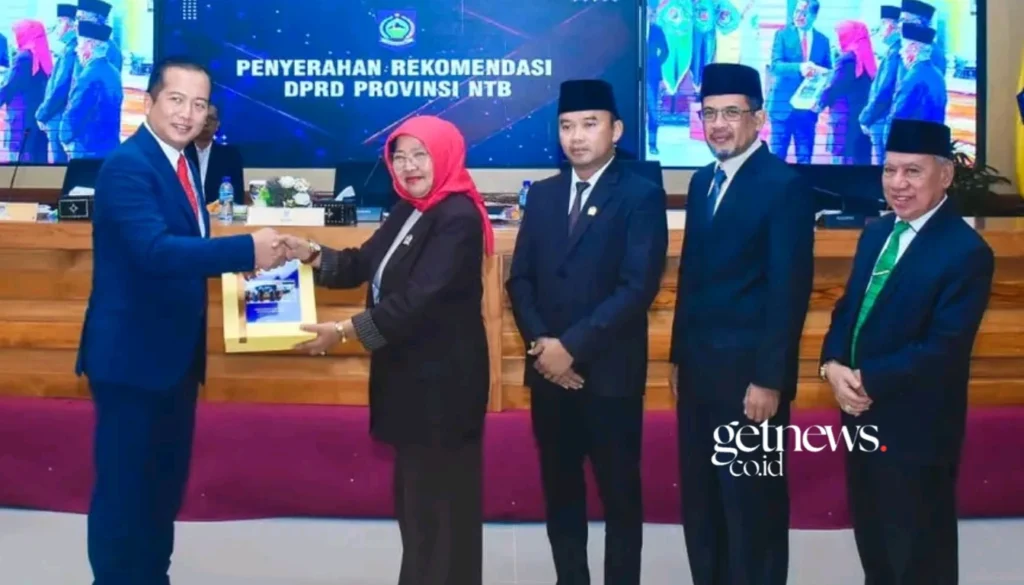
MATARAM — In the high-ceilinged main hall of the NTB Governor’s office, the air was thick with the scent of fiscal realism. On Tuesday (April 22, 2026), the provincial parliament (DPRD) handed down its strategic recommendations for the 2025 accountability report (LKPJ). For Governor Lalu Muhamad Iqbal, the ceremony was more than a procedural requirement; it was a public reaffirmation of his “collective progress” doctrine. As he stood before the legislators, Mr. Iqbal’s message was crisp: in an era of limited fiscal capacity and global volatility, NTB’s survival depends on a “business-as-unusual” synergy between the executive and the legislature.
The timing of this legislative audit is critical. With the national budget deficit lingering and the Hormuz energy crisis inflating logistics costs, NTB’s regional budget (APBD) is under unprecedented strain. The Governor’s admission of “limited fiscal capacity” serves as a strategic pivot, signaling that the province will increasingly rely on efficiency and integrated governance rather than raw expenditure. The introduction of five new Echelon II officials—fresh from a rigorous open selection process (pansel)—is a calculated move to inject “new blood” into vital sectors like environment, youth, and health, ensuring that the bureaucracy is fit for the high-stakes sprint toward 2027.
The Checks and Balances Gambit
Mr. Iqbal’s embrace of legislative criticism as a “form of seriousness” is a masterclass in political alignment. By framing the DPRD’s recommendations as a catalyst for reform rather than an obstacle, he is effectively neutralizing potential “sectoral silos” that often plague regional governance. This collective approach is essential for the success of flagship initiatives like the Desa Berdaya program, which requires seamless coordination between provincial policy and legislative oversight to ensure every rupiah reaches the grassroots without being lost in the bureaucratic fog.
Navigating the Global Headwinds
The challenge of creating formal employment remains the administration’s “Gordian Knot.” As the Governor noted, the demand for jobs is rising just as global dynamics—including the shifting trade routes and Trump’s aggressive trade posturing—threaten regional stability. The strategic verdict from the LKPJ is clear: NTB must leverage its status as a “global archipelago” by strengthening its tourism and agricultural exports while maintaining a hawk-like watch over fiscal integrity. The 79-point MCP KPK score mentioned in earlier forums must now translate into tangible service delivery and investment certainty.
GetNews Strategic Audit: LKPJ 2025 Recommendations
Analysis of the strategic feedback and executive response:
Editorial Verdict: Beyond the Ceremony
The LKPJ session was more than just a formal hand-over of documents; it was a recalibration of NTB’s power dynamics. GetNews views the introduction of new Echelon II officials to the DPRD as a vital transparency gesture. If these “agents of change” can harmonize with the legislative recommendations, the administration’s goal of a “prosperous and global” NTB may well move from rhetoric to reality. In a world of scarcity, synergy is the only true currency.