
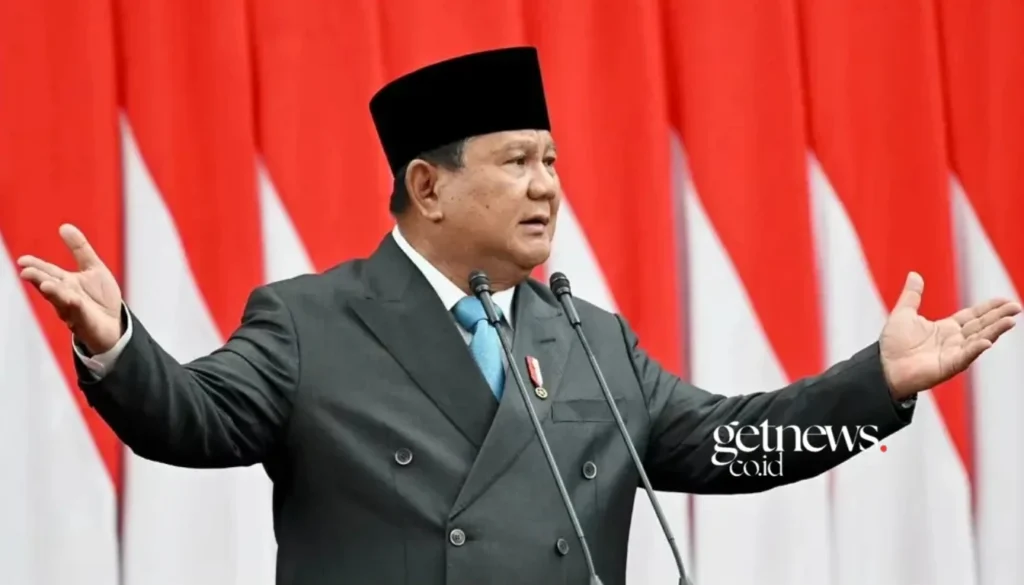
RIGHT ON NATIONAL Awakening Day, Wednesday, May 20, 2026, President Prabowo Subianto stepped confidently into the Plenary Hall of the Indonesian House of Representatives (DPR RI). Dressed in his signature formal attire, he attended the 19th DPR RI Plenary Meeting to present the Macroeconomic Framework and Fiscal Policy Principles (KEM-PPKF) for the 2027 Draft State Budget (RAPBN).
At the honorable podium, the President did not merely read out a string of macroeconomic assumptions that usually put everyone to sleep. Instead, he chose to ignite the room by reviving the “spirit” of Article 33 of the 1945 Constitution—a sacred article on populist economics that we more often encounter in student workbooks than in daily reality.
The Anti-Leak Mantra and the New Regulation Strategy
With a firm tone full of conviction, Prabowo pledged that if Article 33 is implemented purely and consistently, Indonesia will have more than enough capital to achieve prosperity. “Our country will have sufficient resources to ensure that Indonesia genuinely becomes a prosperous and just nation,” the President stated, seemingly sending a declaration of war to commodity smugglers.
To prove that this speech was not just empty rhetoric or a mere cosmetic addition to National Awakening Day, Prabowo immediately announced the deployment of his latest weapon: a Government Regulation (PP) on the Governance of Natural Resource Commodity Exports.
This new strategy is specifically designed to tighten the supervision of Export Proceeds (DHE). The target is clear and uncompromising: ensuring that Indonesia’s natural wealth no longer “leaks” abroad through unseen channels, but instead parks neatly within the country for the welfare of the people.
Closing: When Dollars Stay Home, the Rupiah Can Smile
The decisive move to issue this new Export Regulation serves as an oasis in the middle of a desert of negative sentiments that have recently hit the domestic financial market. If this new rule proves genuinely effective and is enforced indiscriminately, the dollar supply from our natural resources will no longer just pass through, but settle down and strengthen our currency’s foundation.
Let us closely monitor this new regulation together. Hopefully, by plugging the leaks in our natural resource exports, the Rupiah can slowly claw its way back up and distance itself from being labeled the world’s 5th weakest currency by global advisors. After all, no matter how rich the earth, water, and natural resources contained within, none of it matters if the prosperity flows straight into the vaults of banks in Singapore or Switzerland.