

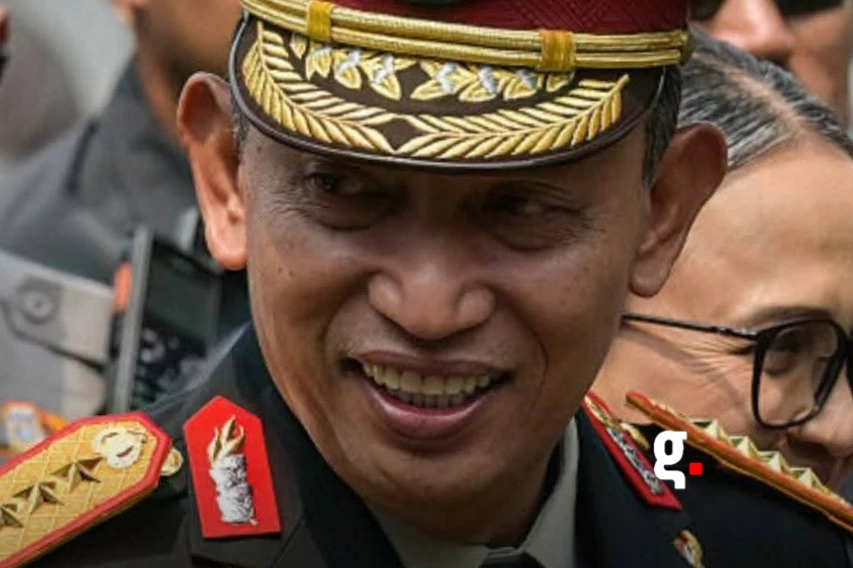

Why the unprecedented treason-level prosecution of a former police chief exposes the lethal fractures within Jakarta’s security hierarchy.
The criminal indictment of former National Police Chief and current Chief of Presidential Staff (KSP), Retired General Listyo Sigit Prabowo, marks an unprecedented operational earthquake inside Indonesia’s state apparatus. By naming one of the most powerful police figures of the modern era as a suspect in an illegal wiretapping network targeting President Prabowo Subianto and Cabinet Secretary Teddy Indra Wijaya, the state has moved beyond standard political containment. The probe lays bare a terrifying structural reality: the very intelligence infrastructure entrusted with national security was systematically re-engineered into an rogue instrument of internal espionage.
The anatomy of the conspiracy reveals a complete collapse of institutional oversight within the security sector. The discovery of an unauthorized intelligence hub operating out of the elite Widya Chandra complex—manned by active-duty high-ranking and mid-level police officers currently detained at the Brimob Headquarters—proves that covert surveillance was not an isolated breach, but an organized shadow operation. By weaponizing state-grade interception technologies against the executive core, the perpetrators transformed an apparatus meant to protect sovereign authority into an invasive mechanism of political leverage.
The downstream consequences hit the absolute bedrock of national stability. When the head of state and key cabinet figures become targets of domestic surveillance orchestrated by their own security establishment, the implicit social contract of governance disintegrates. The risk instantly escalates from a judicial scandal to a systemic crisis of political trust, compelling foreign allies and global markets to re-evaluate the internal stability and data security of the Indonesian state.
While the current leadership frames this purge as a decisive victory for judicial transparency and institutional hygiene, the underlying structural paradox remains deeply troubling. When state institutions grant unchecked, opaque authority over mass surveillance tools without stringent independent oversight, constitutional breaches cease to be anomalies—they become structural inevitabilities. For Jakarta, prosecuting a former police chief is not merely a display of uncompromising legal enforcement; it is a desperate, existential necessity to reclaim the state’s monopoly over its own security apparatus.