

MATARAM — The Provincial Government of West Nusa Tenggara (Pemprov NTB) has taken decisive action to address the issue of approximately 70,000 Out-of-School Children (ATS) spread across ten regencies and cities. The Governor of NTB, H. Lalu Muhamad Iqbal (Miq Iqbal), has instructed a comprehensive, real-data update and validation process (by name by address) down to the village level.
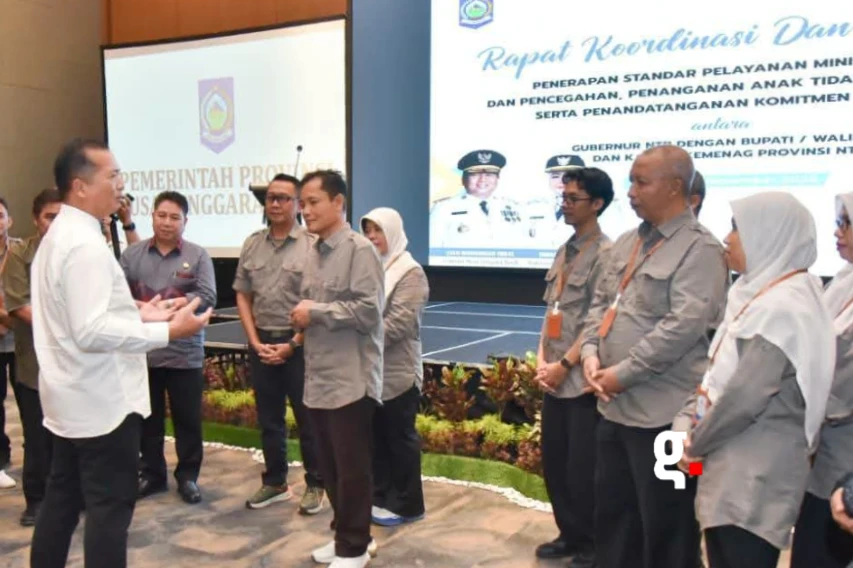
During a Coordination and Evaluation Meeting held in Mataram on Friday (Nov 6, 2026), the NTB Provincial Government, along with regency/city governments and the NTB Regional Office of the Ministry of Religious Affairs, officially agreed upon and signed 7 joint commitments to address ATS.
Governor Miq Iqbal emphasized that ATS management can no longer rely on general approaches or rough estimations. Government intervention must be grounded in factual data regarding the children’s profiles, precise locations, and primary reasons for dropping out of school.
Strategic Audit: Handling 70,000 Out-of-School Children (ATS) in NTB
| Parameter Vector | Substantive Details & NTB Provincial Policy Direction |
|---|---|
| Estimated ATS Population | Approximately 70,000 Children across 10 Regencies/Cities in NTB. |
| Data Strategy | Factual data validation based on by name by address down to the village level. |
| Cross-Sector Agreement | Signing of 7 Joint Commitments on ATS Management (Provincial Government, Regencies/Cities, & Ministry of Religious Affairs NTB). |
| Field Execution Spearhead | Utilizing the Family Posyandu network through the Empowered Village Program (Desa Berdaya). |
*Source: Coordination and Evaluation Meeting on ATS Management, NTB Provincial Government (Data Processed as of Nov 6, 2026)
Family Posyandu and Empowered Village Program Spearhead the Initiative
As a concrete step on the ground, the NTB Provincial Government will optimize the Family Posyandu network integrated into the Empowered Village Program (Program Desa Berdaya) as the main instrument for village-level data recording and validation.
Village cadres will conduct home visits to map school-aged children who are not accessing education, whether due to economic constraints, geographical factors, or social challenges.
“If we want to make a leap in development, there is no other way than through education. Improving data alone will help lift us out of the red zone,” Governor Miq Iqbal asserted before regents, mayors, and heads of relevant agencies.
Boosting Regional HDI Through Integrated Basic Education Services
Through this integrated collaboration framework, the NTB Provincial Government targets a measurable reduction in dropout rates and a sustainable increase in the region’s Human Development Index (HDI).
The intervention extends beyond data validation; it includes re-enrolling children into formal education or non-formal equivalency programs (Packages A, B, C), supported by targeted social assistance and educational scholarships.