

When Those Entrusted with Protecting the State Become a Test of Its Democracy
Indonesia’s latest alleged treason investigation has exposed a question far more consequential than the fate of six police officers: how secure is a democracy when the very institutions entrusted with protecting it become entangled in allegations of political subversion?
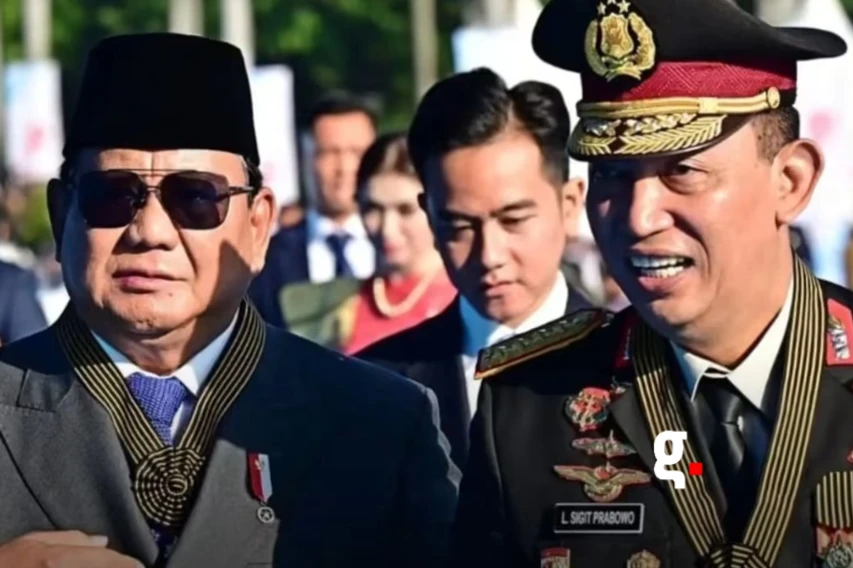
On November 23, 2026, Indonesia’s Criminal Investigation Agency (Bareskrim Polri) announced that six current and former police personnel, including former National Police Chief General Listyo Sigit Prabowo, had been named suspects in an alleged treason plot against President Prabowo Subianto’s government.
According to Bareskrim Chief Commissioner General Asep Safrudin, investigators believe the alleged scheme involved conspiracy, preparation, and preliminary acts directed at undermining the government. Authorities have linked the investigation to an earlier case involving alleged illegal wiretapping of the President and other public figures, as well as unauthorized electronic access and the deletion of digital data.
Police have also described an alleged political motive connected to retaining the position of National Police Chief and weakening public confidence in the administration.
These remain allegations under investigation, not established findings of guilt. Nevertheless, the case presents Indonesia with an institutional challenge that extends well beyond the courtroom.
THE SECURITY APPARATUS AND THE QUESTION OF CIVILIAN CONTROL
Indonesia’s post-1998 democratic transition was built, in part, on the principle that security institutions must operate within constitutional boundaries and remain accountable to civilian authority.
The separation of the police from the military, the retreat of the armed forces from formal political representation, and subsequent institutional reforms were intended to establish a clearer distinction between governing the state and protecting it.
Yet democratic transformation is not completed simply by changing institutional structures. It also requires a political culture in which security institutions understand that their authority derives from the law, not from their proximity to power.
The allegations against senior police figures raise precisely this concern.
If elements within a security institution are suspected of using their authority, intelligence capabilities, or operational networks for political objectives, the problem is no longer confined to individual misconduct. It becomes a question of institutional safeguards.
The distinction between protecting a government and protecting the constitutional order is fundamental.
A government is temporary. The constitutional order is meant to endure.
Security institutions must therefore remain loyal to the law and the Republic, rather than to particular officeholders, political alliances, or the interests of individuals within their own hierarchy.
WHEN INTELLIGENCE BECOMES A POLITICAL INSTRUMENT
The earlier wiretapping investigation adds another dimension to the unfolding controversy.
According to the authorities, the investigation initially concerned alleged illegal surveillance involving the President and other public figures. It subsequently expanded into allegations of a broader political conspiracy.
This development raises a difficult institutional question: who watches the institutions that possess the power to watch everyone else?
Intelligence and surveillance capabilities are indispensable to national security. They can help prevent terrorism, detect foreign interference, and protect critical state infrastructure.
But these same capabilities can become instruments of political control when they operate without adequate legal authorization, independent oversight, and transparent accountability.
The danger is not merely that surveillance may violate individual privacy. It is that information collected through state power could potentially be used to influence political competition, intimidate opponents, or manipulate the balance of power.
A democratic state cannot afford to treat intelligence oversight as an administrative detail. It is one of the foundations of constitutional government.
THE POLITICAL COST OF INSTITUTIONAL UNCERTAINTY
The implications of this case extend beyond Indonesia’s domestic political landscape.
For international investors, regional partners, and diplomatic observers, institutional stability is an important component of national credibility.
Markets do not respond only to economic indicators. They also assess the predictability of government institutions, the independence of law enforcement, and the capacity of a state to manage internal political tensions without undermining the rule of law.
An investigation involving senior figures within the police hierarchy inevitably attracts attention to these questions.
However, the existence of an investigation should not automatically be interpreted as evidence of systemic institutional collapse.
There is an important distinction between a security institution experiencing an internal crisis and a state losing control of its institutions.
Indeed, the willingness to investigate senior officials, regardless of their previous positions, could demonstrate that accountability mechanisms are functioning.
But that interpretation will depend on what follows.
If the investigation is conducted transparently, supported by credible evidence, and subject to judicial scrutiny, it may ultimately reinforce confidence in Indonesia’s institutions.
If, on the other hand, the process becomes entangled in political interests, selective enforcement, or opaque decision-making, it could deepen public distrust.
For Indonesia, the credibility of the process may prove just as consequential as its outcome.
THE REAL TEST IS INSTITUTIONAL REFORM
The immediate priority is to establish the facts through an independent and credible legal process.
The authorities must demonstrate the evidence supporting the allegations, clarify the individual roles of each suspect, and ensure that the rights of those under investigation are protected.
But even a successful prosecution would not necessarily resolve the structural questions exposed by the case.
Indonesia needs stronger safeguards against the political misuse of intelligence capabilities, clearer accountability mechanisms within law enforcement institutions, and effective civilian oversight of security operations.
Institutional loyalty must also be redefined.
The police, military, and intelligence agencies are not extensions of political factions. Their legitimacy comes from serving the Republic under the Constitution and the law.
The challenge is therefore not simply to identify individuals who may have abused their authority. It is to ensure that the institutional environment does not allow such abuses to become possible in the first place.
THE QUESTION BEYOND THE ALLEGATIONS
Indonesia’s democracy has experienced political turbulence before. The post-Reformasi period has repeatedly tested the relationship between political authority, security institutions, and civilian accountability.
The current investigation presents another test, but one with a particularly sensitive dimension: the possibility that those entrusted with protecting the state may themselves become subjects of allegations involving threats to its constitutional order.
The outcome will matter. Yet the institutional lessons may matter even more.
A democracy is not measured solely by its ability to defend a government against an alleged conspiracy. It is also measured by its ability to ensure that the institutions defending that government remain accountable to the law.
The guardians of a republic must possess enough power to protect it, but never so much power that they become unaccountable to the very republic they serve.
That is the paradox Indonesia must now confront.
Sources & References
Official Police Statements & Case Developments
- Indonesian National Police – INP Held Case Review Conference on Wiretapping Case, Kompolnas and Experts Present (19 November 2026)
- Tribratanews Polri – Bareskrim Holds Case Review on Alleged Treason, Involving Kompolnas and Experts (19 November 2026; report credited to ANTARA)
News Reports & Independent Coverage
- Tirto – Bareskrim Names Listyo Sigit and Others as Suspects in Alleged Treason Case (23 November 2026)
- CNN Indonesia – Bareskrim Names Listyo Sigit and Others as Suspects in Alleged Treason Case (23 November 2026)
- detikNews – Bareskrim Names General Listyo Sigit and Others as Suspects in Alleged Treason Case (23 November 2026)
- Associated Press – Indonesia Names Six Current and Former Police Officials as Suspects in an Alleged Treason Plot (23 November 2026)
Editorial Monitoring
This analysis was also informed by the GETNEWS editorial team’s monitoring of live television broadcasts streamed through the official YouTube channels of several Indonesian television networks. These broadcasts served as supplementary material for monitoring public statements and developments surrounding the case.
All allegations referenced in this article remain subject to the ongoing legal process. Statements made by investigators are presented as attributed claims and should not be interpreted as judicial findings of guilt.