
JAKARTA — A radical step has been taken by the Merah Putih Cabinet to reform the international trade architecture and strengthen national monetary resilience. The government has officially enacted Government Regulation (PP) Number 21 of 2026 concerning the mandatory placement of Export Proceeds from Natural Resources (DHE SDA). This omnibus regulation was issued as part of a macro commitment to strengthen the export governance of national strategic commodities.
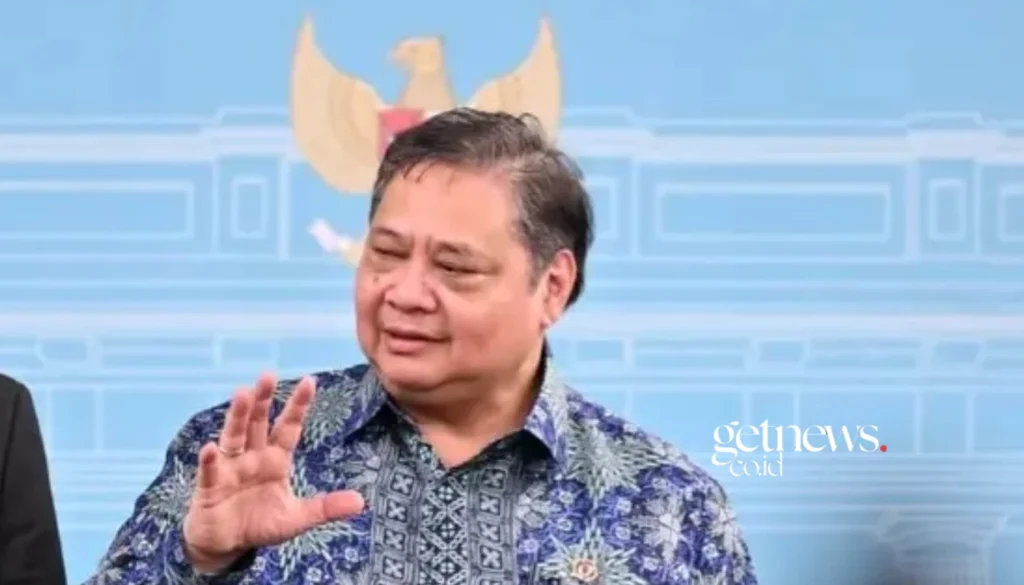
The Coordinating Minister for Economic Affairs, Airlangga Hartarto, explained that the implementation of this policy is a direct execution of the President’s directive to overhaul natural resource exports from upstream to downstream. The policy aims to ensure integrated, transparent, and accountable management so that the financial benefits of strategic commodities are returned to the domestic ecosystem for the maximum prosperity of the wider public.
According to Minister Airlangga, in this initial phase, the implementation of PP 21 of 2026 will focus strictly on three giant commodities that have served as the backbone of the nation’s foreign exchange: coal, crude palm oil (CPO), and ferro alloys (iron alloys).
“The government will fundamentally improve the export governance of strategic natural resource commodities,” stated Minister Airlangga during a press conference in Jakarta.
Single-Gate Mechanism and Export Valuation Mapping
To eliminate overlapping bureaucracy and tighten jurisdictional oversight, the government has appointed the state-owned export enterprise, PT Danantara Sumberdaya Indonesia (PT DSI), as the sole integrator. Under this latest scheme, all international sales of these three commodities must pass through a single-gate mechanism coordinated directly by PT DSI. This step was taken to escalate the validity of trade data and strengthen the state’s oversight functions.
The government did not deny that tightening this new workflow is crucial to closing various fiscal leakage loopholes that have drained state revenues for years. Manipulative corporate practices such as under-invoicing (declaring invoice values below market prices), transfer pricing, and the illegal flight of export proceeds to offshore banks are now targeted for complete eradication. With single-gate oversight, export records are guaranteed to reflect actual transaction values, thereby optimizing the contribution of the commodity sector to tax revenue and macroeconomic growth.
Based on aggregate government data, the urgency of managing these three commodities is well-founded. The combined export value of coal, palm oil, and ferro alloys throughout 2025 reached a fantastic figure of USD 66.13 billion, or equivalent to 23.4 percent of the nation’s total export share. This structural figure was supported by coal exports worth USD 24.48 billion, followed by palm oil at USD 24.42 billion, and ferro alloy shipments contributing USD 16.49 billion.
Transition Period and CEISA 4.0 System Integration
Recognizing the need for business actors to adapt their corporate processes, Minister Airlangga emphasized that the enforcement of this new rule will feature a flexible transition period. The adjustment timeline is set to run from June 2026 until the final deadline on January 1, 2027, at the latest.
During this transition window, international trade activities by private and regional exporting companies are guaranteed to operate normally as usual. However, exporters are legally burdened with a new obligation to report every manifest of their export activities to PT DSI through a database system integrated directly with the CEISA 4.0 portal owned by the Directorate General of Customs and Excise, Ministry of Finance.
The government promises to conduct comprehensive evaluations periodically, particularly in the first three months post-enactment, to detect technical bottlenecks so that this policy does not clog logistics flows or disrupt national export performance. Airlangga assured that the government continues to guarantee business certainty and respects all valid trade contracts signed between domestic exporters and international buyers abroad.
INDONESIA INSIGHTS: STRATEGIC AUDIT OF REGULATORY REFORM PP NO. 21 OF 2026
| Policy Cluster | Regulatory Specifications & Target Commodities | Export Valuation Mapping & Cyber Integration |
|---|---|---|
| Legal Umbrella & Integrator | PP Number 21 of 2026. Exports are diverted through a single-gate mechanism via the SOE PT Danantara Sumberdaya Indonesia (PT DSI). | 1. Macro Valuation Aggregate (2025 Data): Total export value of the 3 strategic commodities reached USD 66.13 billion (23.4% of national exports).2. Sectoral Breakdown: Coal contributed USD 24.48 billion; Palm Oil at USD 24.42 billion; Ferro Alloys valued at USD 16.49 billion.3. System Architecture: Mandate for upstream-downstream transaction data reporting must be fully interconnected with the CEISA 4.0 Portal of the Directorate General of Customs and Excise. |
| Phase I Commodities | 1. Coal 2. Palm Oil 3. Ferro Alloys (Iron Alloys) | |
| Risk Management & Mitigation | Gradual transition period (June 2026 – January 2027) to minimize supply chain shocks and protect ongoing trade contracts. |
Macro Evaluation Data: Getnews Data Intelligence Unit | Analysis of Foreign Capital Flows, Monetary Resilience, and SDA Export Fiscal Policy, June 2026.
Source: Info Publik