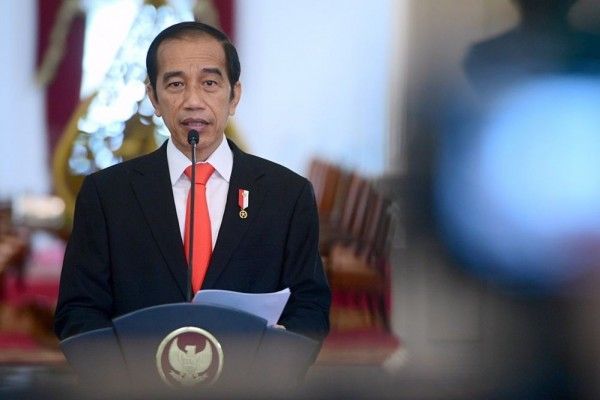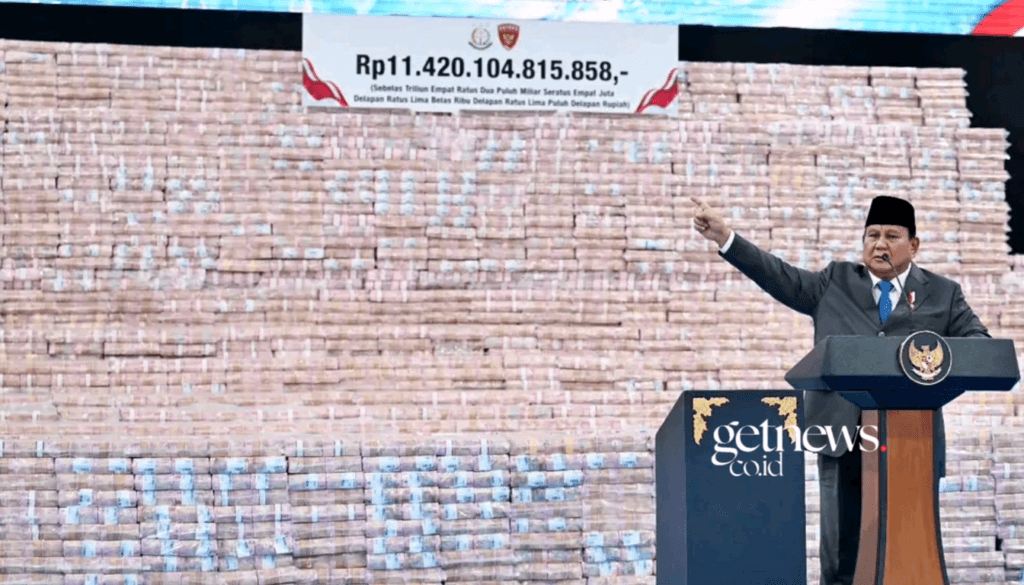


AMIDST THE GEOPOLITICAL tremors in the Middle East that sent Brent crude prices surging past the psychological barrier of US100 per barrel, Indonesia appears to hold a different narrative of composure. On Wednesday (March 11, 2026), Finance Minister Purbaya Yudhi Sadewa addressed the public with a contrasting message: the domestic economy is not merely surviving—it is expanding. With the Indonesia Crude Price (ICP) average hovering at US68 per barrel—comfortably below the budget assumption of US$70—Jakarta enjoys a “breathing room” that many other energy-importing nations lack.
Minister Purbaya positioned the State Budget (APBN) not just as a ledger, but as an elastic “shock absorber.” This confidence is bolstered by the hardening muscles of the real sector; a Manufacturing Index (PMI) of 53.8 indicates that Indonesia’s industrial engines are roaring louder than those of China or the United States. However, behind these optimistic figures lies the true challenge: the transmission of liquidity into the market and the protection of purchasing power against a nominal inflation rate of 4.76%.
Liquidity Diplomacy and Aggressive Spending
The Finance Minister’s strategy is bold: accelerating state spending with a staggering 41.9% (YoY) leap in the first quarter. This is a “full-throttle” maneuver to ensure growth is evenly distributed from the outset. Simultaneously, the fiscal-monetary orchestration—placing IDR 200 trillion of government cash into the banking system—serves as a tactical move to drive down lending rates to 8.8%.
While the deficit was recorded at IDR 135.7 trillion, the 0.53% ratio to GDP sends a clear signal to global markets: Indonesia remains fiscally disciplined. Yet, the sustainability of this performance will heavily depend on how long domestic commodity prices can be shielded from increasingly volatile global price spikes.
GetNews Strategic Audit: Fiscal Resilience & Economic Expansion
An analysis of the efficacy of the State Budget (APBN) as a national economic stabilizer:
Editorial Verdict: Measured Optimism
The nation’s Treasurer is celebrating the success of his fiscal instruments, and macro figures certainly support the festivities. However, the real challenge is “shadow inflation.” Despite being explained as a low-base effect, rising prices at the grassroots level remain a threat to purchasing power. Minister Purbaya’s “no-worry” strategy must be coupled with high vigilance against geopolitical escalations that could pivot ICP assumptions at any moment. Currently, Indonesia’s budget is solid, but it stands on a global stage that is increasingly slippery.
Further Reading:
A Poultry Pivot: Lombok’s $75m Bet on Protein Autonomy