
IN MODERN political economy, the sovereignty of a nation is no longer measured by the strength of its armed forces, but by the proficiency of its bureaucrats in performing national gaslighting.
According to this week’s editorial analysis in The Economist, the air has been transformed from a mere mixture of hydrogen and oxygen into tranches of real estate worth trillions of dollars. Consequently, for this Republic, guarding the skies is a matter of “living or dying.” Or at the very least, appearing to guard the skies is.
In the Capital, Orwellian dogma is carved into the entrance of the Parliamentary Building: Our Sky is Ours. Foreign Wings are Illusions. Blindness is Nationalism.
That day, giant screens across the city—from train stations to the smartphones of the commoners—simultaneously broadcast a fiery speech by the Chairman of Committee One, the supreme council overseeing the defense of the nation’s canopy. The Chairman, a—pardon the term—rotund politician in a safari shirt whose waist buttons were nearly surrendering to gravity, stood at the podium with a clenched fist.
”There is no legal basis!” the Chairman bellowed, his neck veins bulging while a spray of saliva hit the bulletproof microphone. “I emphasize once again to all patriots of the nation! There is not a single legal basis in this Republic that provides free air access to foreign parties! Our skies are sacred! Our canopy is tightly closed to spy planes, foreign drones, or hegemonic fighter jets! Our sovereignty is absolute!”
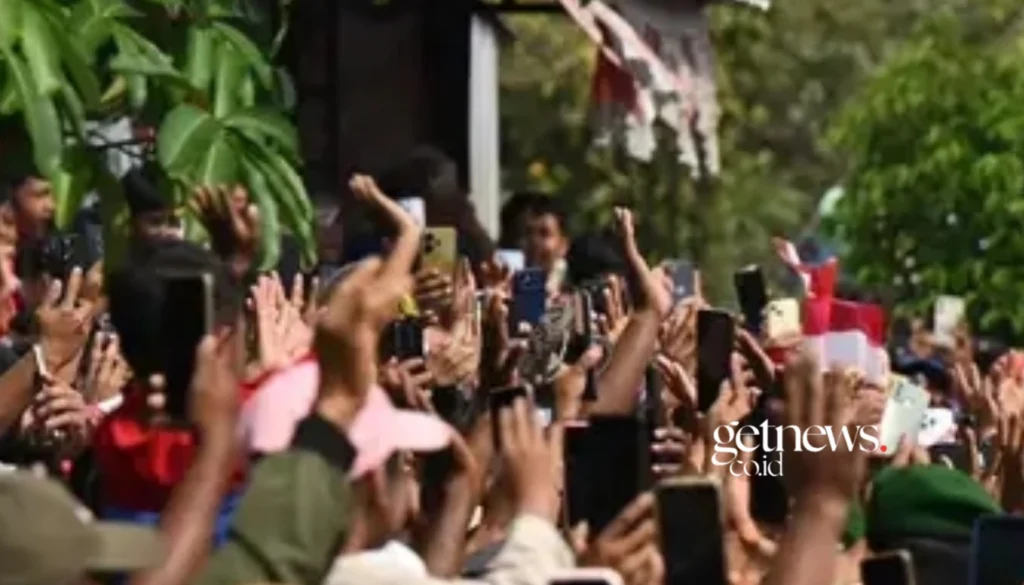
In the city square, the masses cheered in delirium. They waved cheap plastic flags made in foreign factories, feeling their chests swell with burning patriotic pride. The commoners—the working horses whose backs were lashed daily by taxes and inflation—felt a sense of relief. At least, even if the price of rice was unaffordable, the sky above their heads was still purely their own.
However, two hundred meters beneath that square, inside a windowless bunker belonging to the Ministry of the Grand Canopy, Dirga was experiencing a cognitive dissonance that nearly caused a brain hemorrhage.
Dirga was a Level Two Radar Analyst. His job was to stare at a 4×4 meter sonar screen that mapped every flying object in the Republic’s airspace. And at the exact second the Chairman spoke of “absolute sovereignty” on the screen, Dirga’s radar was filled with giant red blips, pulsing aggressively.
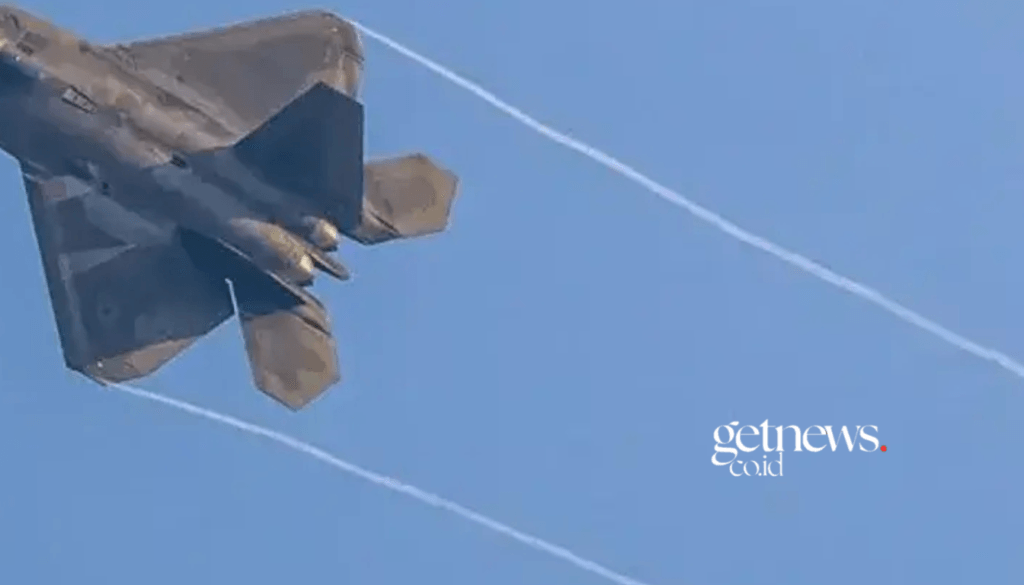
Not one, not two. There were a dozen stealth fighter formations in a delta wing style and three strategic reconnaissance drones the size of a tennis court. Their military transponders emitted hex codes belonging to the Free Federation—a collection of superpowers that frequently lent money to the Republic at suffocating interest rates. They were cruising casually through the capital’s airspace, cutting through domestic flight paths as if the Republic’s sky were a toll road built by their ancestors.
With trembling hands, Dirga printed the radar log. He ran through the concrete corridors to the office of his superior, Mr. Surya—a veteran bureaucrat possessing the art of Doublethink at a god-like level.
”Mr. Surya, report!” Dirga gasped, slamming the log onto his superior’s mahogany desk. “We’ve been breached! Fifteen Free Federation military aircraft are joyriding at 30,000 feet. They are violating our airspace right as Committee One is denying all foreign access!”
Mr. Surya did not panic. He did not hit the alarm. He didn’t even stop chewing his imported almonds. He simply adjusted his reading glasses, stared at the log for a moment, and then looked at Dirga with a gaze of pity—the way a teacher looks at a toddler who failed to spell the word ‘cat.’
”Dirga, my patriotic friend,” Mr. Surya sighed softly, feeding the log into a humming document shredder. “Did you hear the Chairman’s speech at Committee One just now?”
”Yes, sir! He said there is no legal basis for foreigners to enter!”
”Exactly!” Mr. Surya tapped the table. “The Chairman said there is no legal basis. This means, de jure, their presence up there is illegal. And because our country is a state of law, things that have no legal basis are considered void and non-existent by law.”
Dirga frowned. His common sense began to revolt. “You mean…?”
”I mean, Dirga, because they entered without a legal basis, their existence is officially unrecognized by the state. And if the state does not recognize their existence, then bureaucratically… they do not exist.“
Mr. Surya smiled, a perfect Orwellian grin. “How could you see a plane that legally does not exist? Your radar screen must be malfunctioning. Revise the data. Those are not Free Federation stealth jets. Those are… a flock of metallic storks migrating for the winter. Or perhaps an anomaly of cumulonimbus clouds with a magnetic charge. Yes, Magnetic Clouds sounds much more poetic for a press release.”
Dirga stood stunned. He realized how brilliant and insane the system was.
The regime didn’t need to buy air defense systems worth hundreds of trillions to expel intruders. They only needed to use legal rhetoric. If a foreign plane violates the border, you don’t need to shoot down the plane; you only need to shoot down its definition. In the modern world, sovereignty is not defended with surface-to-air missiles, but with white-out and paper shredders.
”But Sir,” Dirga tried to fight the remains of his conscience. “What if the people look up and see a giant drone blocking the sun? What do we tell them?”
Mr. Surya laughed, a cold, soulless sound. “Our people are too busy looking down at their predatory lending apps on their phones, Dirga. They have no time to look up. And even if someone is curious enough to glance at the sky, Committee One has already installed the ‘legal basis’ in their heads. They will think it’s just a giant kite or an atmospheric glitch.”
Dirga returned to his radar desk. He sat, staring at the red blips still dancing freely across the canopy of his nation’s sovereignty. His fingers slowly typed an override code on the keyboard. Following the instructions of the Ministry of Truth, he blocked the red blips, changing their labels from “Fighter Jet – Foreign” to “Cumulonimbus Cloud – Domestic.”
The radar screen was clean again. The sky was sovereign once more—digitally.
That evening, The Economist published a detached and analytical editorial:
“Capital markets responded very positively to the firm rhetoric of Committee One regarding the ban on foreign air access. The domestic currency strengthened by 2.5%. Global investors, particularly from the Free Federation, feel very comfortable with this climate of ‘stability.’ They realize that in this Republic, fierce domestic political rhetoric does not interfere with their military aerial logistics in the real world.”
On the ground, the Chairman of Committee One went home in his limousine, hailed as a hero who guarded the skies. In the atmosphere, the foreign squadrons continued to maneuver through the clouds without ever paying a toll. And in his damp basement, Dirga sipped his synthetic coffee while staring at his radar screen. He smiled a hollow smile. He had finally managed to love his country, and in doing so, he had managed to love his own blindness.
Ignorance is Strength. Rhetoric is Sovereignty. And the sky, forever, will remain blue as long as we agree to close our eyes.
Anomaly Continues:
Algorithms of Deceit, Crude Oil Equities, and a Verse Ablaze in Isfahan