
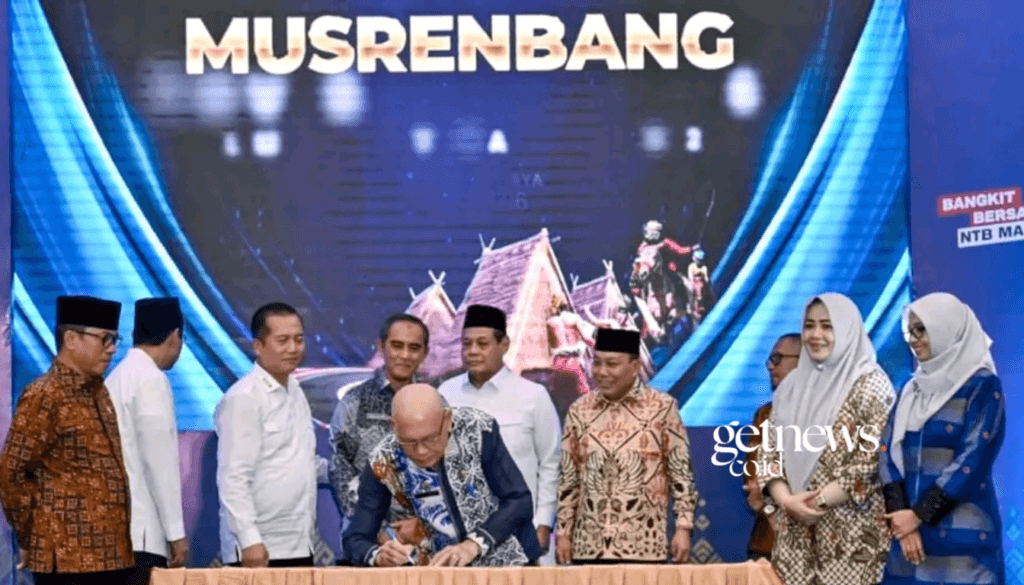
MATARAM — In the grand ballroom of Hotel Lombok Raya, the tone was one of cautious optimism. As the Ministry of Home Affairs delivered its assessment during the 2026 Regional Development Planning Forum (Musrenbang), it became clear that West Nusa Tenggara (NTB) is carving out a rare success story in regional governance. Restuardy Daud, Director General of Regional Development, lauded the province’s “positive trajectory,” citing a blend of robust agricultural output and a remarkably low unemployment rate of 3%—significantly outperforming the national average. For Governor Lalu Muhamad Iqbal, this is more than just a pat on the back; it is a validation of his “Triple Agenda” in a year of brutal global uncertainty.
However, the accolades come with a sobering mandate. While the headline numbers look healthy, the underlying challenge remains the formalization of the labor market. The Ministry has set a daunting target for 2027, eyeing national growth of up to 7.5%. For NTB to contribute its share, it must pivot from traditional subsistence toward high-value industrialization—a goal that dovetails with the ongoing BUMD restructuring and the formation of NTB Kapital. The province’s ability to maintain an MCP KPK score of 79 points suggests that the “ghost funds” of the past are being replaced by a more transparent, integrated budgetary framework.
The Inflation Fortress
Amidst the Strait of Hormuz crisis and its inflationary ripple effects, the Ministry’s directive on food security is paramount. NTB, a perennial rice granary, is being asked to act as a regional stabilizer. The mandate for the Regional Inflation Control Team (TPID) is clear: ensure the local supply chain remains untethered from global energy shocks. By focusing on inter-regional cooperation and market operations, NTB is attempting to build a “fiscal fortress” that protects the purchasing power of its citizens while the national deficit looms at IDR 240.1 trillion.
The Mid-Term Gambit
As 2027 marks the mid-term of the 2025–2029 Regional Long-Term Development Plan (RPJMD), this Musrenbang is the ultimate strategic pivot. The administration is no longer just planning; it is accelerating. The successful integration of programs like Desa Berdaya—which channels IDR 300 million directly to villages—will be the litmus test for this “sharper” planning. If Mr. Iqbal can translate Kemendagri’s praise into sustained industrial growth and formal job creation, NTB may well become the blueprint for how a regional economy can thrive in a multi-polar, high-inflation world.
GetNews Strategic Audit: Musrenbang NTB 2026
Analysis of the development indicators and federal assessment:
Editorial Verdict: Beyond the Plaudits
Kemendagri’s appreciation is a rare currency in Indonesian politics, but it is one that must be spent wisely. GetNews views this Musrenbang as the start of NTB’s “industrial awakening.” While the 3% unemployment rate is a stellar achievement, the real victory will lie in turning those informal agricultural roles into stable, high-tech formal positions. Governance is a marathon, and Mr. Iqbal has just cleared the first hurdle with flying colors.