

The Indonesian capital market just got hit by another financial earthquake. The globally renowned index provider, Morgan Stanley Capital International (MSCI), delivered a jaw-dropping warning: Indonesia’s capital market status is at risk of being downgraded from an Emerging Market to a Standalone Market!
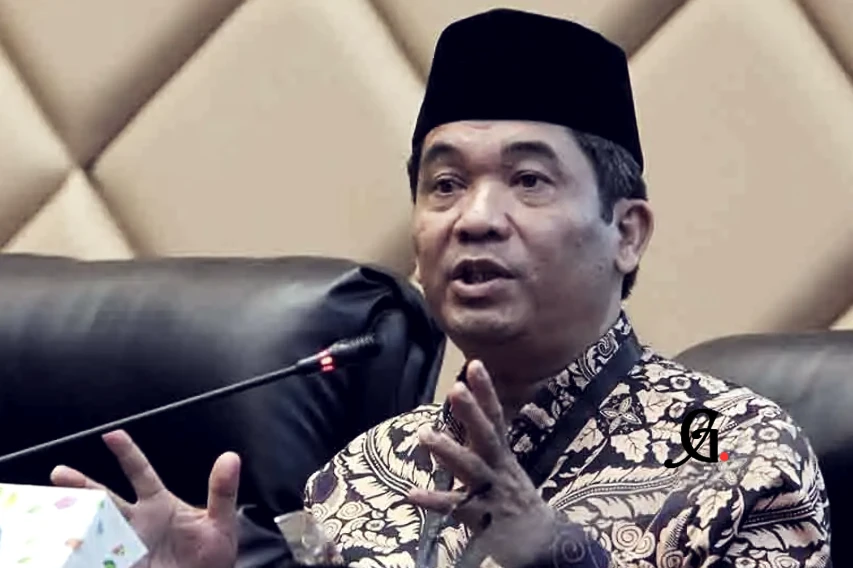
Executive Director of the Center of Economic and Law Studies (CELIOS), Bhima Yudhistira, alongside capital market analyst Ferry Latuhihin, pointed to a major catalyst behind MSCI’s red flag: The high-stakes acquisition plan of PT Bayan Resources Tbk (BYAN) shares—owned by billionaire Low Tuck Kwong—by South Kalimantan mining tycoon Andi Syamsuddin Arsyad, affectionately known as Haji Isam!
Why MSCI’s Downgrade Threat Is Making Global Investors Sweat
Getting downgraded from an Emerging Market to a Standalone Market is essentially the financial equivalent of getting demoted from the Premier League to a local Sunday league. If this worst-case scenario materializes, billions of dollars in foreign institutional funds will flee the Jakarta Composite Index (JCI) faster than speedway racers, because major global pension funds are legally barred from investing in “standalone” markets.
So, why did Haji Isam’s mega-deal over BYAN trigger alarm bells at MSCI, CELIOS, and among top analysts?
- The “Ghost Float” & Concentrated Ownership Horror: Global fund managers crave transparency and healthy public floats. Mega-acquisitions of coal giants like BYAN risk concentrating ownership into a tight circle of billionaires (High Shareholding Concentration), squeezing out genuine public liquidity (free float) and making price discovery look like a magician’s trick.
- Arriving Right After OJK’s IDR 2.1 Trillion Hammer: MSCI’s warning arrived on the heels of OJK dropping a record-breaking IDR 2.1 trillion (~$135 million USD) fine on three top conglomerate issuers (DSSA, BREN, and CUAN) over rigged IPO allocations and trading manipulation. MSCI’s spotlight proves the international community is closely watching how “invisible hands” move Indonesian stocks!
- Governance Red Flags & Retail Investor Risks: Consolidating massive coal assets under politically connected tycoons elevates corporate governance risks. Global investors worry about minority shareholder protections and the potential for index manipulation when a few giant tickers dominate market capitalization.
The Dark Comedy of JCI: When “Deity Stocks” Threaten to Isolate the Market
This MSCI warning serves as a wake-up call for the Indonesia Stock Exchange (IDX). For years, local regulators boasted about soaring total market capitalization driven by ballooning valuations of tycoon-backed stocks. But in the eyes of global index providers, a skyrocketing market cap without real liquidity, genuine transparency, and a healthy free float is just a fragile bubble waiting to pop!
MARKET IMPACT MATRIX
| Crisis Metric | Ground Reality | Strategic Capital Market Impact |
|---|---|---|
| MSCI Status Threat | Warning of downgrade from Emerging Market to Standalone Market. | Imminent risk of mass foreign capital flight from the JCI. |
| Featured Corporate Deal | Proposed acquisition of BYAN shares (Low Tuck Kwong) by Haji Isam’s group. | Severe concerns over squeezed free float & ownership concentration. |
| OJK Enforcement Sweep | IDR 2.1 Trillion fine levied on DSSA, BREN, & CUAN. | Aggressive regulatory crackdown on High Shareholding Concentration violations. |
Conclusion: Don’t Let Indonesia’s Bourse Turn Into a Private Club!
OJK’s recent crackdown on market manipulation is a step in the right direction, but it must be followed by radical overhauls of free float rules and retail investor protections. Regulators cannot afford to be soft on billionaire mega-deals if they want the Indonesian stock market to stay on the global map instead of getting demoted to a private local trading hall!
Emha Firmansyah / Lilisatya Wati / Evi T.