

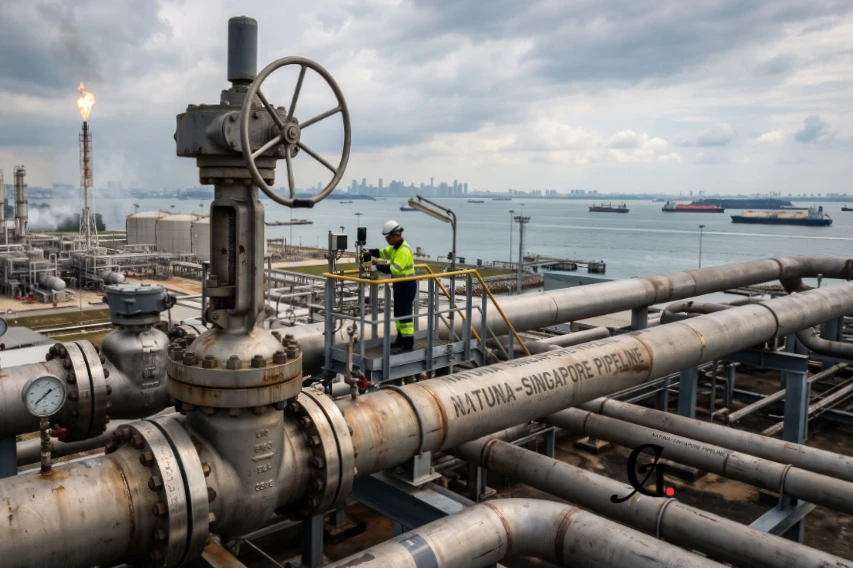
INDONESIA’S DECISION to curb or phase out natural gas exports to Singapore via pipeline is a textbook study in resource nationalism overtaking regional economic integration. For decades, the steady flow of piped gas from South Sumatra and the Natuna Sea has been a quiet cornerstone of Singapore’s energy security, helping power the city-state’s electricity grid and industrial sector. Now, Jakarta is signaling a clear pivot: domestic needs must come first.
On paper, Indonesia’s logic appears sound. As domestic industrial hubs, fertilizer plants, and state electricity generation demand more fuel to support GDP growth, redirecting natural gas internally promises higher domestic value-add. Indonesia argues that utilizing gas at home to drive local manufacturing yields a far higher economic return than simply collecting export revenues from a neighbor.
However, in the intricate world of energy economics, such geopolitical maneuvers carry hidden costs:
- Infrastructure & Logistics Bottlenecks: Piped gas exported directly to Singapore cannot automatically be rerouted to Java or other domestic industrial centers without expensive, multi-billion-dollar regasification units and domestic pipeline interconnections that take years to build.
- Investment & Credit Risk: Unilateral export cuts or contract non-renewals risk shaking the confidence of international energy majors and foreign investors who financed the upstream gas fields on the promise of stable, long-term US dollar revenues from Singapore.
- Regional Energy Security: For Singapore, the move accelerates its strategic shift toward Liquefied Natural Gas (LNG) imports from global markets and renewable power imports, ultimately diminishing Jakarta’s geopolitical leverage over its wealthier neighbor over the long run.
Strategic Audit: Strategic Reorientation of Indonesian Natural Gas Exports to Singapore
| Parameter Vector | Substantive Analysis & Geo-Economic Implications |
|---|---|
| Primary Policy Objective | Redirecting piped gas supplies to meet national industrial demands, state utility (PLN) power generation, and domestic fertilizer production. |
| Impact on Singapore | Accelerating diversification toward global LNG imports and regional renewable energy imports due to declining pipeline gas supply. |
| Domestic Infrastructure Challenges | Limitations in inter-island pipeline networks and regasification facilities risk creating absorption bottlenecks domestically. |
| Upstream Investment Climate Risks | Potential erosion of attractiveness for upstream oil and gas investments if long-term export contract certainty is disrupted. |
*Source: Getnews Energy & Economic Intelligence Unit (2026)
Prioritizing domestic energy supply is every sovereign nation’s right. However, for Indonesia, the policy’s ultimate success hinges on the speed at which domestic absorption infrastructure is readied. If export taps are turned off before local industry is capable of taking in the full volume, Jakarta risks forfeiting valuable export revenue without gaining the promised boost in industrial efficiency.
Lilisatya Wati/Evi T. Janiantari