

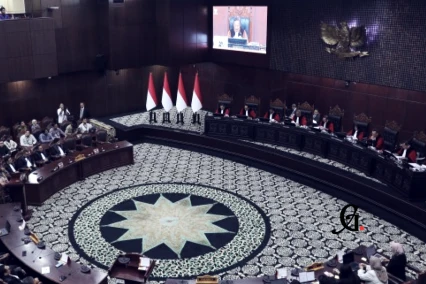
Indonesia’s Constitutional Court (MK) has slammed the brakes on executive budget maneuvering. Under Ruling No. 100/PUU-XXIV/2026, stemming from a petition filed by civil watchdog MBG Watch, the Court ruled that the President can no longer unilaterally reallocate or expand national budget allocations merely by issuing a Presidential Regulation (Perpres).
Following the landmark verdict, MBG Watch issued a sharp reminder to the Palace: “The State Budget is not the President’s personal wallet.” The ruling marks a major victory for fiscal transparency and parliamentary oversight, particularly concerning mega-projects like the Free Nutritious Meal (MBG) program.
3 Key Takeaways on Executive Fiscal Limits
The Constitutional Court’s decision restores crucial legislative checks and balances to prevent public funds from being managed arbitrarily:
- Parliamentary Approval Required for Expenditure Shifts: The executive branch may no longer shift central government expenditures that alter spending functions through a Perpres alone. Any fundamental reallocation now requires formal authorization from the House of Representatives (DPR).
- Restricted Emergency Fiscal Discretion: While rapid fiscal action during genuine emergencies remains permissible, execution is no longer exempt from legislative oversight—DPR approval remains mandatory.
- Protection of Village Funds: Central authorities are barred from raiding Village Funds (Dana Desa) for national projects; such funds must strictly align with local autonomy and village development goals.
Direct Implications for the Free Nutritious Meal (MBG) Program
The ruling severely constrains executive flexibility in funding the Free Nutritious Meal (MBG) program mid-cycle. Should budget shortfalls arise, the government can no longer quietly transfer funds from other ministerial budgets without open legislative deliberation.
This decision complements the Court’s July 2026 ruling, which mandated the complete decoupling of MBG funding from the constitutional 20% mandatory education budget no later than the 2028 fiscal budget. Together, both verdicts deliver a clear mandate: priority social programs may proceed, but constitutional fiscal governance remains non-negotiable.
(Emha Firmansyah/Lilisatya Wati)