
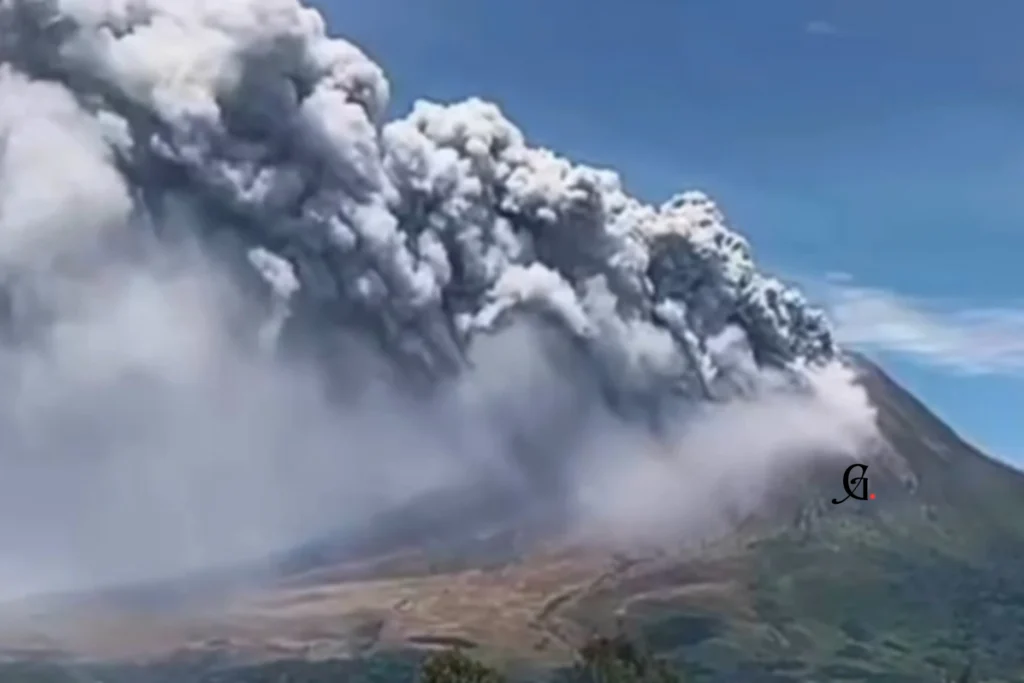
KARO, Indonesia — Mount Sinabung erupted sharply on Monday, prompting Indonesian authorities to elevate the volcano’s alert level as a massive ash column rose 3,500 meters above the peak, or nearly 5,960 meters above sea level.
The eruption occurred at approximately 12:00 p.m. local time, following a significant surge in volcanic activity detected through visual and instrumental monitoring. In response, the Center for Volcanology and Geological Hazard Mitigation (PVMBG) raised the status of the volcano in North Sumatra from Level II (Caution) to Level III (Alert) as of 12:30 p.m.
Volcanologists warned that Monday’s discharge represents an initial eruption, with the potential for larger events in the coming days. Plumes of volcanic ash drifted toward the east-southeast, directly threatening the nearby city of Berastagi.
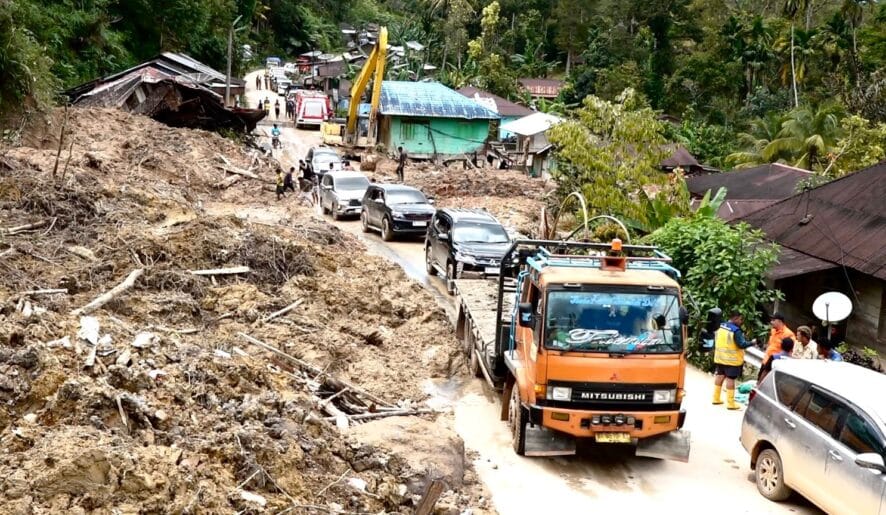
Local emergency units and regional authorities began distributing protective face masks to residents in affected zones to mitigate respiratory risks. The National Disaster Management Agency (BNPB) confirmed that local disaster management units in Karo Regency have ordered citizens within high-risk sectors to evacuate immediately.
”At present, casualties and material damages are still being assessed,” said Berton SP Panjaitan, Acting Head of Data, Information, and Disaster Communication at BNPB. “Field officers continue to monitor Mount Sinabung’s activity continuously.”
The surge in activity coincides with an active 90-day Emergency Transition to Recovery status previously declared by local authorities, which remains in effect from July 8 through October 5.
The BNPB issued strict directives prohibiting all public, visitor, and tourist activities within abandoned villages, enforcing a mandatory exclusion zone of 3 kilometers from the summit and a 6-kilometer sectoral radius to the south-southeast. Officials also advised communities along nearby river basins to prepare for potential cold lava flows (lahar).