
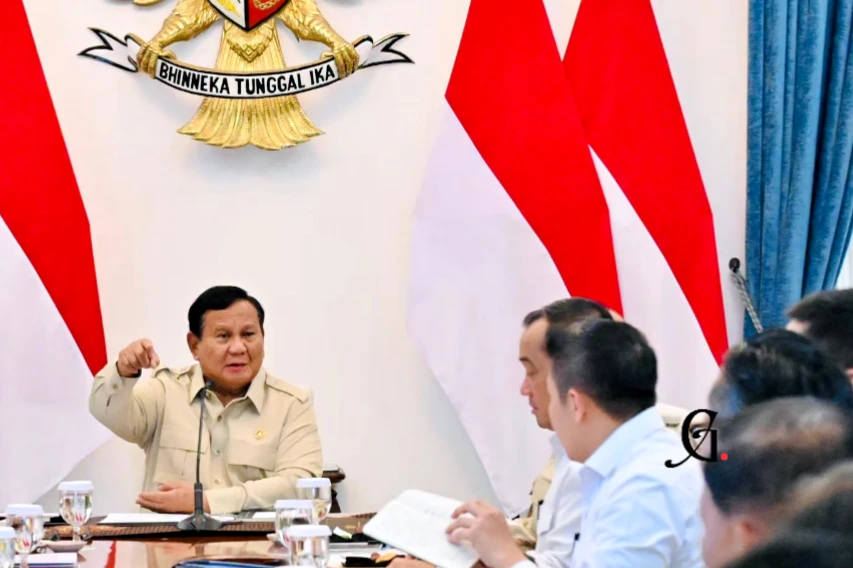
The Cabinet Restricted Meeting at Merdeka Palace, Jakarta, on Monday (7/9/2026) suddenly felt like a high-stakes policy marathon. President Prabowo Subianto led his cabinet ministers to address a striking spectrum of issues: ranging from cutting-edge banking digitalization strategies to bracing for the wrath of El Niño and volcanic eruptions.
According to official government releases, the primary focus of this session centered on expanding financial inclusion while strengthening the national social safety net amid impending climate threats.
”One Soul, One Bank Account” and Disaster Preparedness
The government recorded an impressive financial inclusion rate of 93.62 percent, alongside a financial literacy rate of 63.57 percent (based on a joint survey by OJK and BPS). However, President Prabowo is apparently not satisfied as long as citizens are still stashing cash under their mattresses.
Key strategic directives issued from the Palace include:
- Automated BRI & BSI Accounts: The President directed that every Indonesian citizen must hold a bank account. The framework involves assigning BRI and BSI to cross-reference Dukcapil population data directly with Bank Indonesia’s payment systems.
- QRIS Expansion as a Payment Gateway: QRIS usage will be aggressively expanded into rural areas to accelerate digital financial literacy and streamline micro-transactions for everyday citizens.
- Rice Aid Extended: To counter drought risks from El Niño, state rice assistance has been officially extended through October, November, and December 2026.
- Volcanic Eruption Response: Active eruption zones are being closely monitored to ensure local economic activity, food supply chains, and regional flight paths remain operational.
Banking Digitalization vs. Ground Reality
Matching Dukcapil data so that every citizen automatically receives a bank account is a highly progressive idea on paper. This move is expected to slice through bureaucratic red tape and prevent social aid from being misallocated.
However, the real test lies in literacy. Owning a bank account and scanning QR codes is undeniably modern, but ensuring that rural citizens do not fall victim to phishing scams or confusion over system deductions is a critical homework assignment that OJK and Bank Indonesia must rigorously supervise.
Editor: Lilisatya Wati