
“Thwarted at the Final Hour”: When SCOTUS Slaps Down Trump’s California Maneuver & MA Leaves Parliament Rattled!

Judicial institutions on opposite sides of the globe in early November 2026 seem to be unanimously declaring “Enough is Enough!” against eleventh-hour political theater. Just hours before polling stations opened in the 2026 US Midterm Elections, the Supreme Court of the United States (SCOTUS) delivered a swift knockout by denying the Trump Administration Department of Justice’s (DOJ) emergency application seeking to freeze 20,000 mail-in ballots in California!
Hoping to weaponize federal court authority to impound ballots in a crucial state holding 52 House seats, the DOJ instead ran headfirst into a constitutional wall: SCOTUS upheld the Purcell Doctrine and Article I, Section 4 of the US Constitution—Federal Authorities Are Strictly Forbidden From Altering State Election Rules While Voting Is Underway!
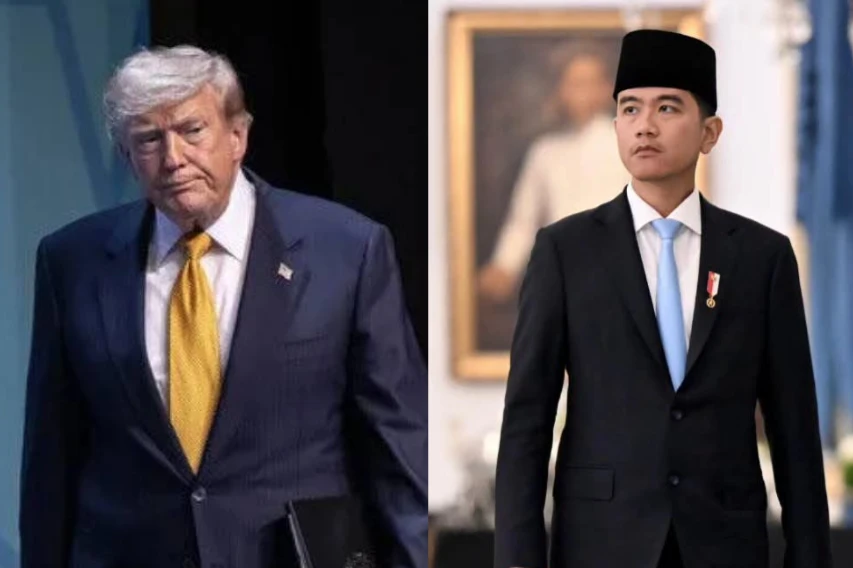
Fascinatingly, SCOTUS’s firm check on Trump’s shadow docket strategy offers a high-definition mirror to events in Jakarta. While SCOTUS refused to serve as a rubber stamp for freezing votes on unverified allegations, Indonesia’s Supreme Court (MA) via Ruling No. 742 K/TUN/2026 took an even more decisive stance: declaring VP Gibran’s High School Equivalence Letter null and void and ordering its physical destruction!
Analyzing Two Judicial ‘Swift Strikes’: Washington vs. Jakarta
Why do SCOTUS’s “lightning jurisprudence” in the United States and the Indonesian Supreme Court’s “document shredding mandate” present such a compelling, witty comparative analysis of constitutional law? Consider three core dimensions:
- The Collapse of “Eleventh-Hour Brinkmanship”: In the US, the DOJ grounded its accusations of 20,000 noncitizen votes on indicative DHS lists lacking verified criminal evidence. SCOTUS—typically receptive to conservative emergency dockets—refused to play along. In Indonesia, defense attorneys who stalled the production of original UTS Insearch records in PTUN court until Denny Indrayana walked out met the same fate: the Supreme Court ruled the 2019 equivalence certificate permanently flawed and ordered it sent directly to the paper shredder!
- Upholding Legal Autonomy vs. Accountability Shock: The Purcell principle in the US protects state election autonomy from federal overreach. In Indonesia, Article 7A of the 1945 Constitution (analyzed by Prof. Jimly Asshiddiqie) and Mahfud MD’s calls for criminal probes into the KPU and Education Ministry enforce a similar line: ministry-level administrative trickery cannot bypass constitutional standards, and officials involved face potential law enforcement scrutiny.
- Impact on the Electoral Political Stage: SCOTUS’s swift order shut down attempts to delegitimize Midterm results in California, forcing Trump to face plummeting approval ratings fueled by Obama’s Ohio rally speech. Meanwhile in Indonesia, the Supreme Court’s ruling severely strained the ruling coalition: Gerindra struggled to insulate executive tenure from “administrative flaws,” while Democrat leaders openly floated: “The options are now voluntary resignation or impeachment!”
SCOTUS VS MA RI JUDICIAL INTERVENTION COMPARISON MATRIX
| Parameter Vector | SCOTUS Jurisprudence (California Midterms 2026) | Indonesian Supreme Court Ruling (No. 742 K/TUN/2026) |
|---|---|---|
| Subject Application / Lawsuit | Trump DOJ requested freezing ~20,000 California ballots over noncitizen claims. | HM Subhan sued to invalidate Gibran’s High School Equivalence Letter No. 9149/D.D1/KS/2019. |
| Verdict & Legal Principle | Emergency Request Denied; Enforcement of the Purcell Principle & state sovereignty. | Voided Ab Initio; Mandated retrieval and physical destruction of the certificate. |
| Direct Political Consequence | Blocked attempts to delegitimize 52 California House seats; thwarted shadow docket tactics. | Invalidated 2024 Presidential filing basis; triggered Article 7A impeachment mechanics. |
Conclusion: Don’t Mess With the Constitution at the Last Minute!
SCOTUS’s rapid order in Washington and the Indonesian Supreme Court’s firm ruling in Jakarta send a universal message to those holding executive power: courts are not arenas for eleventh-hour political maneuvers. When established rules are twisted for short-term political gains, supreme judicial authorities ultimately step in to uphold the constitution. Citizens—whether in California or Indonesia—can take comfort in knowing that political acrobatics do not always win the day!
(Emha Firmansyah/Lilisatya Wati)
Photo: ANTARA/BPMI Setpres