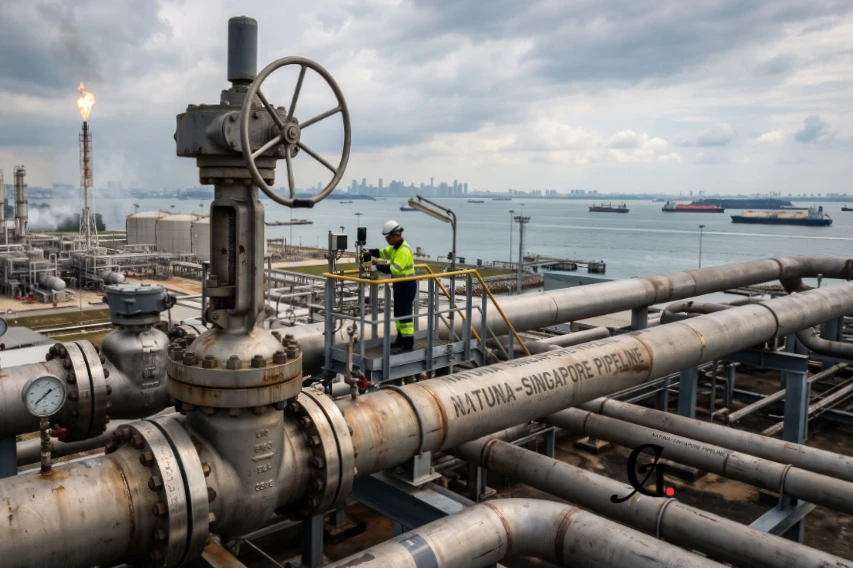

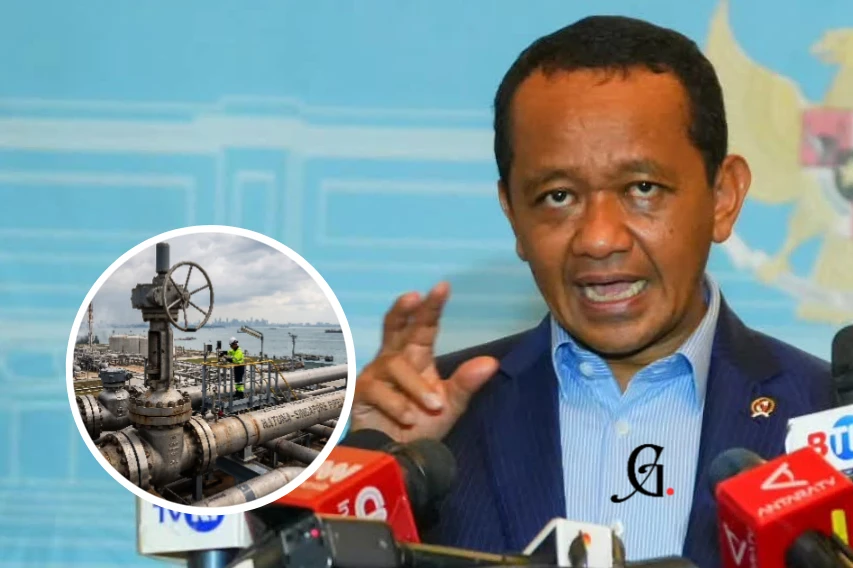
Energy and Mineral Resources Minister Bahlil Lahadalia’s clarification regarding the reduction of natural gas exports to Singapore provides valuable legal certainty amid geo-economic market concerns in the region. The affirmation that the cut of 31 million standard cubic feet per day (MMSCFD)—or approximately 8 percent of total export volume—remains strictly under the contract limit underscores Indonesia’s commitment to the sanctity of contracts.
From a macro-energy perspective, redirecting a portion of export volumes to the domestic market represents a measured application of resource nationalism. As domestic manufacturing hubs, fertilizer plants, and state utility PLN require reliable fuel supplies to support national GDP growth targets, prioritizing domestic allocation is a rational strategic choice.
However, behind the assurance that Indonesia is adhering to international trade agreements, this maneuver presents technical and investment dynamics that warrant close monitoring:
- Contractual Flexibility vs. Investor Confidence: While the volume adjustment is legally sound under contract terms, seamless domestic gas absorption must be ensured to prevent international production sharing contractors from doubting the commercial stability of upstream operations.
- Infrastructure Readiness: Rerouting piped gas from Sumatra and Natuna to the national market requires adequate liquefied natural gas (LNG) regasification terminals and inter-island pipeline connections to avoid supply bottlenecks at domestic industrial sites.
Strategic Audit: Indonesia’s Piped Gas Export Adjustment to Singapore (October 2026)
| Parameter Vector | Substantive Details & Policy Framework (Ministry of Energy) |
|---|---|
| Reduction Volume | A cut of 31 MMSCFD, representing 8% of the total overall gas export volume to Singapore. |
| Contractual Legality | Confirmed to be within official contract flexibility clauses, ensuring no breach of bilateral export agreements. |
| Reallocation Objective | Meeting rising domestic energy demand across national manufacturing, state grid (PLN) generation, and local fertilizer production. |
| Responsible Authority | Minister of Energy and Mineral Resources / Coordinating Minister for Downstream Industry & Energy Transition Bahlil Lahadalia (Press Conference, Jakarta, Oct 26, 2026). |
*Source: Ministry of Energy and Mineral Resources / Kompas TV Official Statement (Processed Data, Oct 26, 2026)
The government’s firm stance on prioritizing domestic energy needs without breaching bilateral treaties demonstrates diplomatic maturity. The next challenge is demonstrating that the redirected 31 MMSCFD effectively powers national manufacturing to generate tangible added value for the Indonesian economy.
(Fath ‘O/Evi T./Hidayat/Lilisatya Wati)