
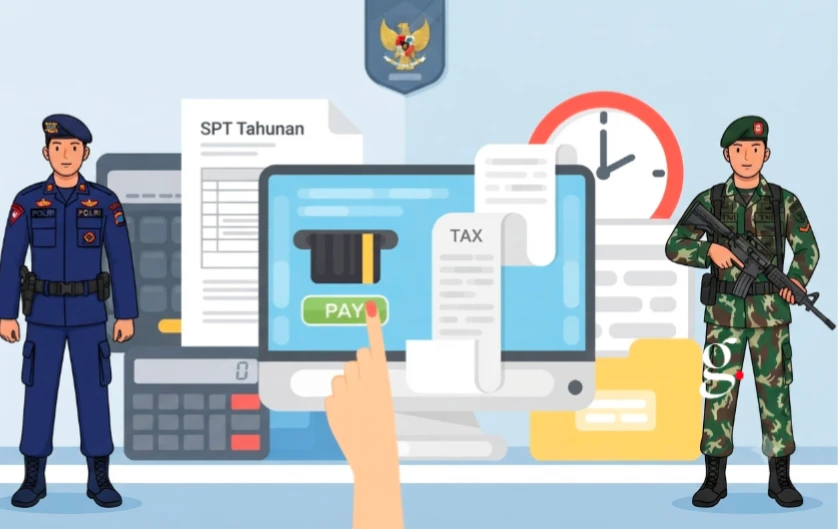
There is no shortage of creative policy ideas in this country. While neighborhood military officers (Babinsa) and local police officers (Bhabinkamtibmas) usually spend their days keeping village peace, settling land boundary disputes between neighbors, or attending community health clinics, their job description is about to get a lot more colorful. Yes, you read that right: they are now being enlisted to help monitor tax compliance.
This plan by the Directorate General of Taxes (DJP) to involve military and police personnel at the grassroots level has raised more than a few eyebrows. Picture this: you are enjoying a peaceful morning coffee on your porch, contemplating your monthly bills, when suddenly a uniformed officer knocks on your gate. But instead of organizing the night patrol, he asks: “Excuse me, sir, have you filed your annual tax return?”
Naturally, this ultra-creative initiative triggered swift responses from lawmakers in parliament.
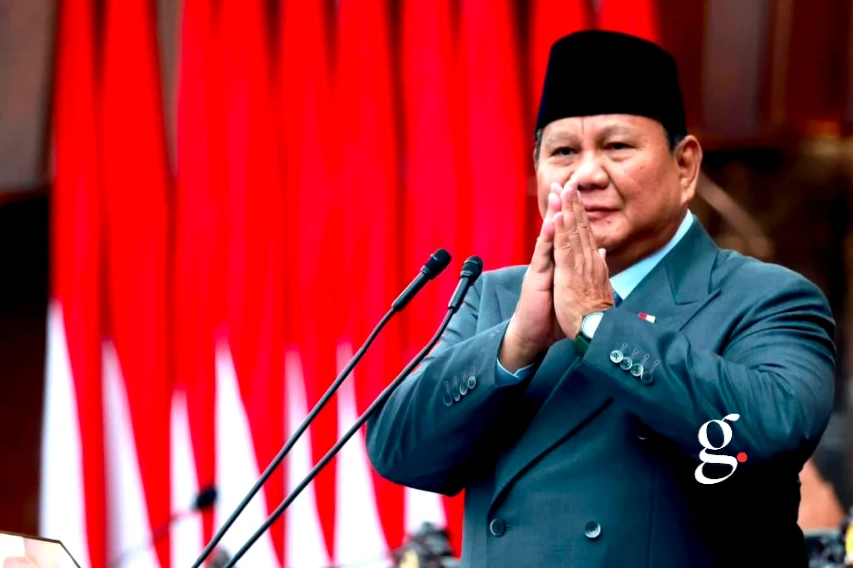
House Speaker Puan Maharani felt compelled to issue a warning, emphasizing that involving security forces must not erode public trust. Meanwhile, House Deputy Speaker Saan Mustopa was even more direct, urging the tax authority to ensure taxpayers do not feel intimidated, harassed, or at risk of a sudden heart attack upon seeing green and brown uniforms standing on their doorstep.
The warnings from parliamentary leaders are entirely sensible—and, frankly, speak directly to the anxiety of ordinary citizens.
On paper, optimizing state revenue through tax collection is a noble cause to safeguard the national treasury. But when enforced through a territorial security approach, the line between “Friendly Tax Education” and “Subtle Intimidation” becomes razor-thin.
Indonesians are generally welcoming people, but when uniformed officers show up asking about personal finances, the natural reaction boils down to two options: instant panic or pretending to faint. A ideal tax collection culture—built on friendly, transparent, and accountable public service—risks feeling more like an unexpected roadside traffic checkpoint.
Which begs the big question: Is our tax collection really so desperate that it requires territorial security enforcement?
In reality, low tax compliance among citizens rarely stems from a desire to rebel against paying taxes. More often than not, it is due to convoluted bureaucracy, crashing online portals, or a fundamental question citizens constantly ask themselves: “Is my tax money actually returning as decent public infrastructure, or is it sliding smoothly into an official’s bank account?”
If the core issue is transparency and service quality, the solution is to reform the system and build public trust—not to deploy uniformed personnel for close-range surveillance.
Hopefully, parliament’s advice will be taken to heart. The last thing anyone wants while trying to collect state funds is for citizens to start locking their front doors every time a military motorcycle rides down the street. After all, paying taxes should ideally bring relief for contributing to the nation, not a cardio workout every time someone knocks on the door.