

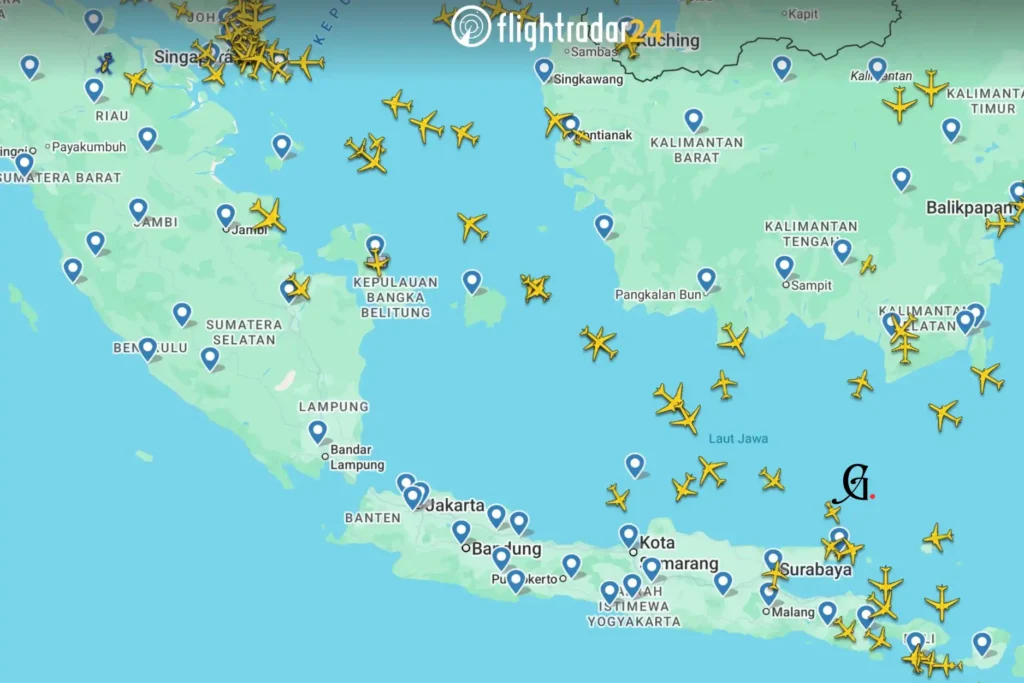
JAKARTA — Aviation authorities in Indonesia suspended flight operations across eight airports on Sunday, September 6, 2026, including Soekarno-Hatta International Airport in Jakarta and Radin Inten II Airport in Lampung, as massive plumes of volcanic ash from Mount Anak Krakatau drifted across Java and Sumatra.
The grounded routes left an estimated 170,000 passengers stranded and disrupted more than 1,500 flights, marking one of the most severe regional aviation disruptions in recent years.
The eruption, which began late Friday and intensified over the weekend, sent ash clouds soaring up to 15,000 meters (nearly 50,000 feet) into the atmosphere. Satellite surveillance from the Darwin Volcanic Ash Advisory Centre detected high-altitude ash corridors spreading northeast over Jakarta, Banten, and West Java, as well as northwest across Lampung and Bengkulu.
”To date, 1,558 flights have been delayed or canceled across the eight affected facilities,” Indonesia’s Ministry of Transportation said in a statement, noting that over 900 canceled services were centered at Jakarta’s main international hub.
To mitigate air traffic gridlock, Transportation Minister Dudy Purwagandhi authorized flight diversions to alternative landing hubs in Kertajati, Semarang, and Surabaya. Meanwhile, the National Disaster Management Agency (BNPB) announced plans to initiate cloud-seeding and weather modification operations to accelerate rainfall and wash away airborne volcanic particulates.
Maritime authorities have issued strict navigation warnings, enforcing an exclusion zone prohibiting vessels from approaching within 3 kilometers of Anak Krakatau’s crater.