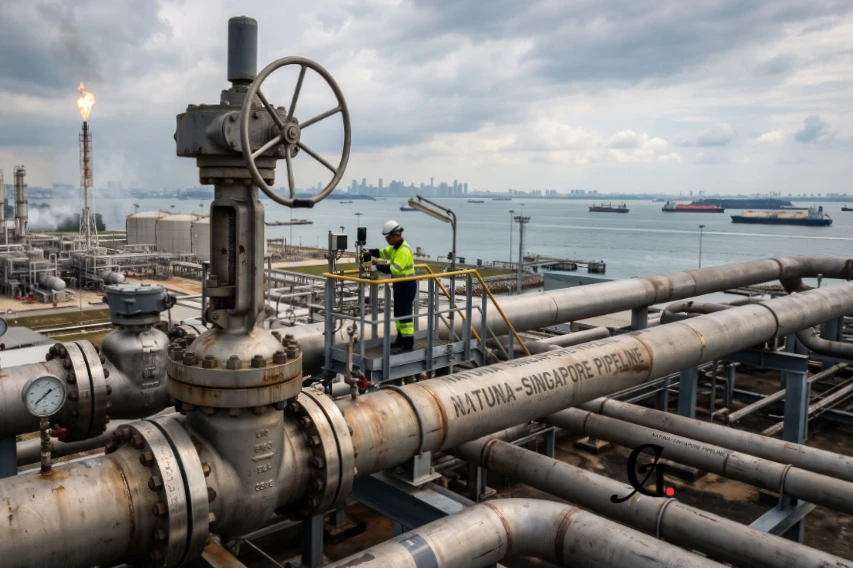


The Indonesian government’s strategy to build large-scale domestic crude oil storage facilities marks a pivotal moment in the nation’s energy security posture. The statement by Coordinating Minister for Downstream Industry and Energy Transition / Minister of Energy and Mineral Resources (ESDM) Bahlil Lahadalia—affirming that imported crude will directly enter Indonesia without intermediate stops in “Country A, Country B, or Country C”—signals an explicit intention to end Indonesia’s historical reliance on offshore tank farms and oil trading hubs in neighboring states like Singapore.
Executed under a Public Service Agency (BLU) framework in partnership with private enterprises, this initiative is driven by escalating Middle East geopolitical tensions that threaten global energy supply chains. In terms of national security calculations, allowing national crude oil supplies to transit through foreign refineries or offshore storage tanks leaves Indonesia acutely exposed to geopolitical instability, maritime logistics disruptions, transit service charges, and handling fees that swell the national import bill.
Bypassing transit hubs for crude supply carries two fundamental macroeconomic and geopolitical implications:
- Logistical Cost Efficiency & National Reserve Autonomy: Establishing adequate domestic storage capacity enables Indonesia to eliminate intermediary fees and transit commissions at foreign ports while significantly extending its Strategic Petroleum Reserve (SPR) days to withstand global supply shocks.
- Reshaping Regional Energy Logistics: Developing independent oil storage infrastructure will gradually shift Southeast Asia’s commercial crude landscape. The policy underscores Indonesia’s resolve to transition from a passive consumer market reliant on third-party storage to a sovereign actor controlling its energy logistics from the port of origin directly to domestic refineries.
Strategic Audit: Domestic Crude Oil Storage Facility Development (October 2026)
| Parameter Vector | Substantive Details & Ministry of Energy Policy Framework |
|---|---|
| Core Policy Initiative | Constructing domestic crude oil storage facilities to eliminate third-country transit routes for imported oil shipments. |
| Execution Scheme | Managed via a Public Service Agency (BLU) in collaboration with strategic corporate partners (Public-Private Partnership). |
| Primary Driver | Mitigating energy supply risks stemming from Middle East geopolitical tensions and international shipping route vulnerabilities. |
| Macroeconomic Impact Target | Optimizing maritime logistics costs, reducing foreign exchange leakage from foreign transit fees, and expanding the national Strategic Petroleum Reserve (SPR). |
*Source: IDX Channel / Press Conference by Minister of Energy Bahlil Lahadalia (Processed Data as of October 26, 2026)
Developing domestic crude oil storage is a tangible step toward long-overdue energy sovereignty. By bypassing foreign transit ports, Indonesia secures its physical energy supply against global geopolitical volatility while asserting its standing as a sovereign nation in full control of its economic supply chains.
Putra/Lilisatya Wati/Emha Firmansyah